A demonstration is not a deployment
A publication on robotics and physical AI that tracks which robots are built, announced and actually deployed.
Introduction
Robotics.world is a publication on robotics and physical AI, in English and in Italian: the news, the research, the companies, the roles and the events of the field — in its words, the record of the robots being built and put to work.
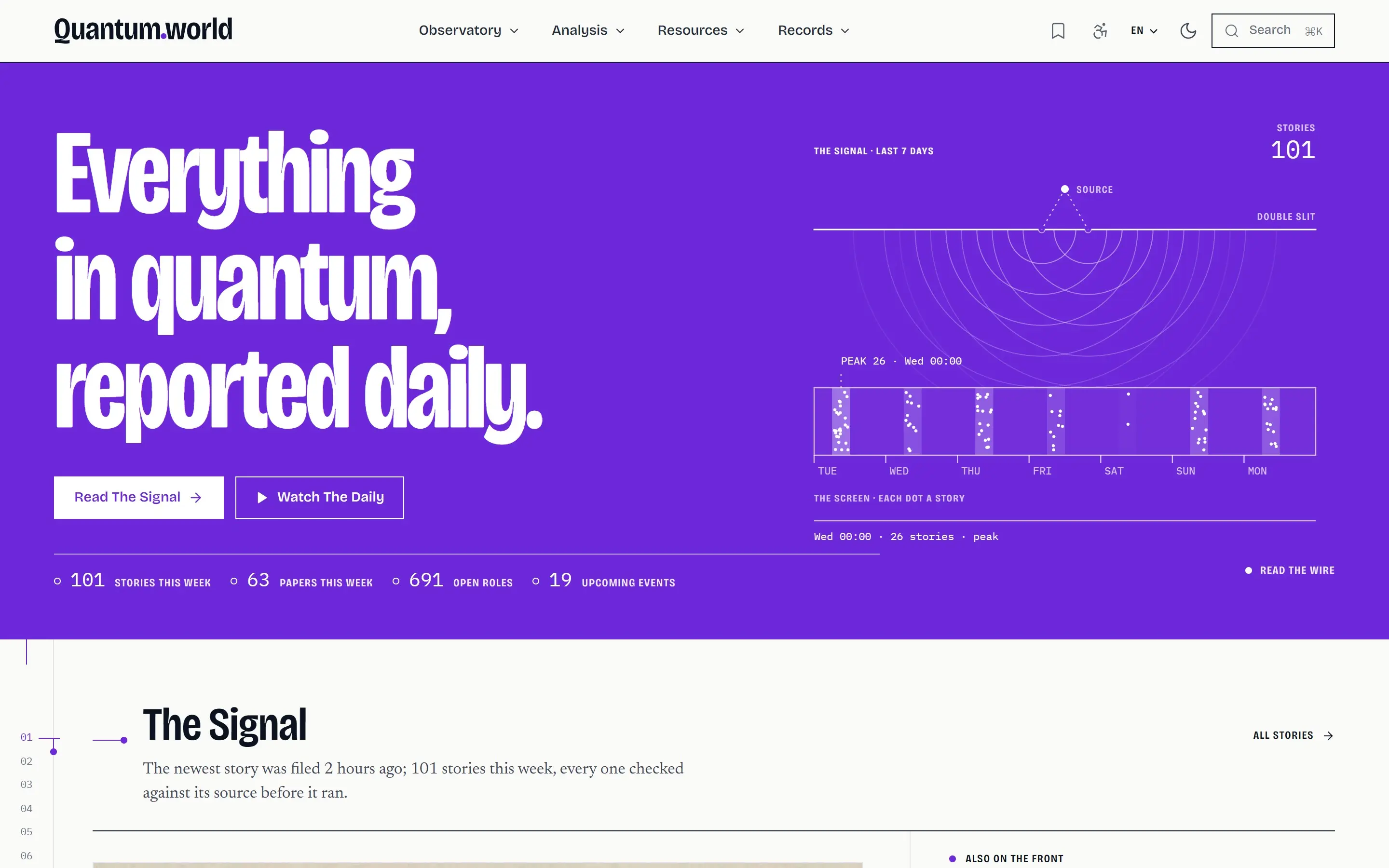
It shares the newsroom system FIG’s founder designed for AI.info. Its own design work is about one distinction the field makes hard to see: the difference between a robot on camera and a robot at work.
The challenge
Robotics is reported through video. A clip of a humanoid folding laundry or walking through a factory travels faster than any paper, and says nothing about how it was made — whether the robot acted on its own, was operated remotely, or was sped up. Announcements of partnerships read like deployments; specifications appear in keynotes long before they appear in data sheets.
The concept
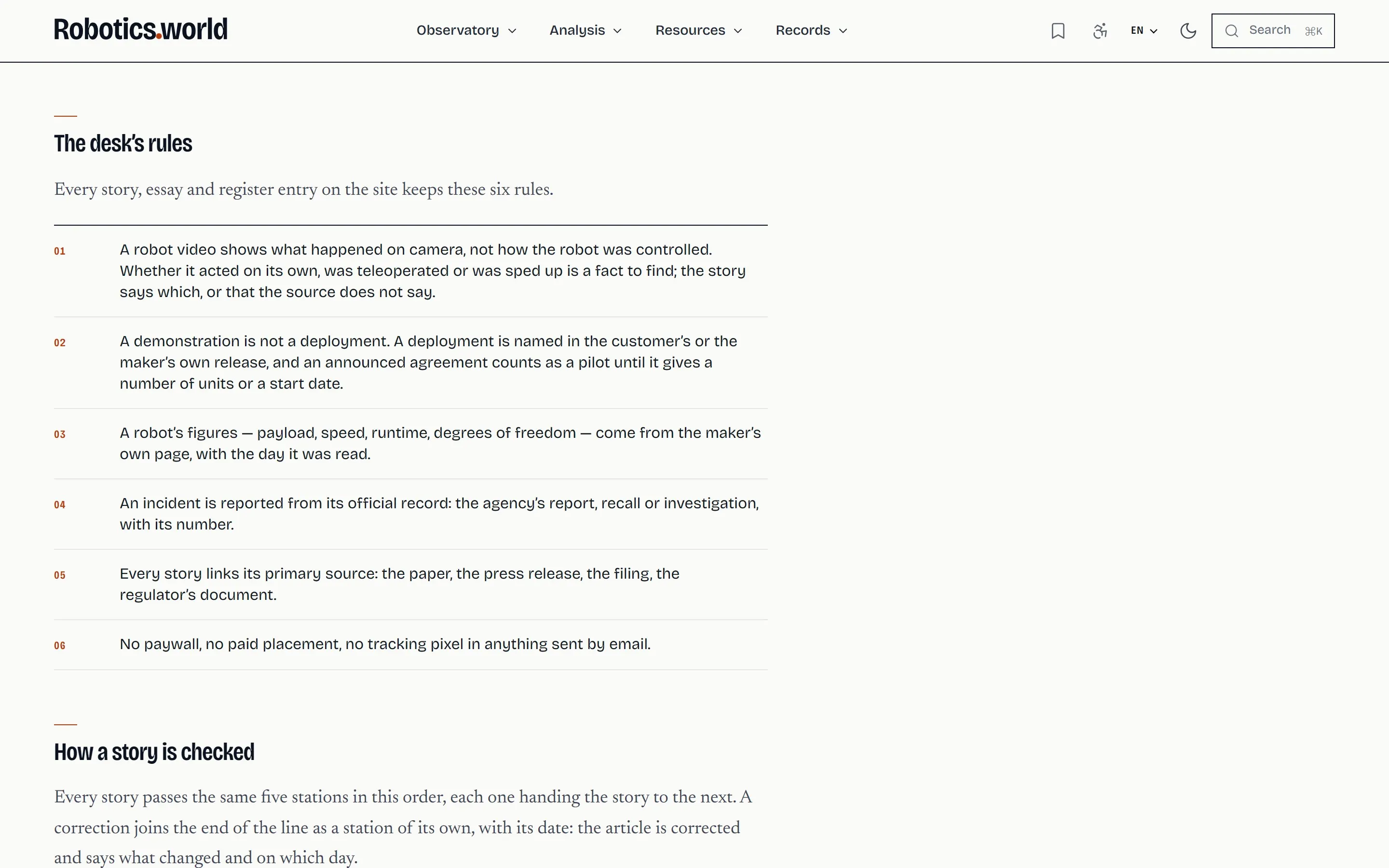
Six rules, kept by every story and register entry, turn those ambiguities into facts to find:
- A robot video shows what happened on camera, not how the robot was controlled. Autonomous, teleoperated or sped up: the story says which, or says that the source does not.
- A demonstration is not a deployment. A deployment is named in the customer’s or the maker’s own release; an announced agreement counts as a pilot until it gives a number of units or a start date.
- A robot’s figures — payload, speed, runtime, degrees of freedom — come from the maker’s own page, with the day it was read.
- An incident is reported from its official record, with its number.
A demonstration is not a deployment.
The records
Two registers keep what the news moves past:
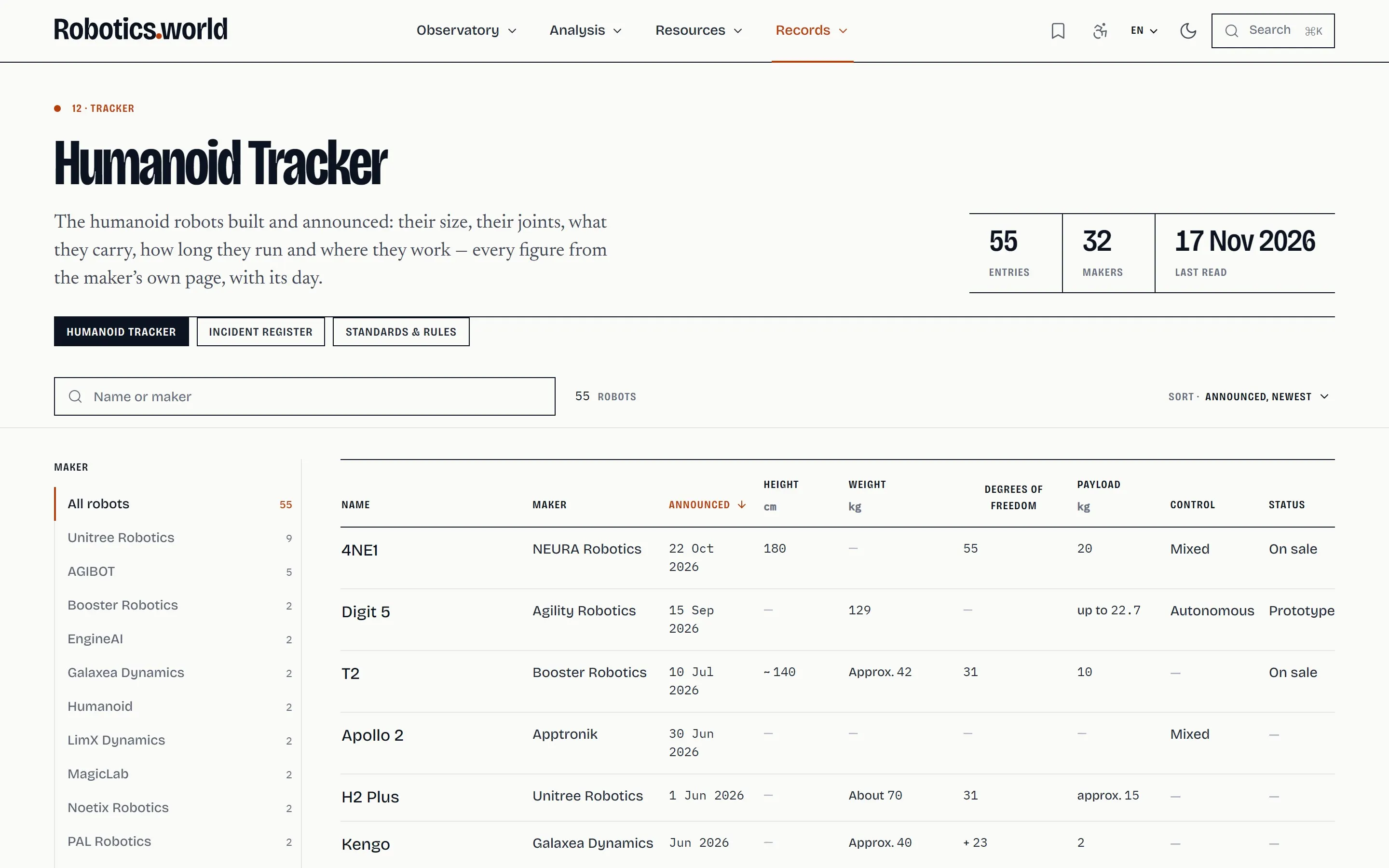
- The Humanoid Tracker: the humanoid robots built and announced — their size, their joints, what they carry, how long they run and where they work, every figure from the maker’s own page.
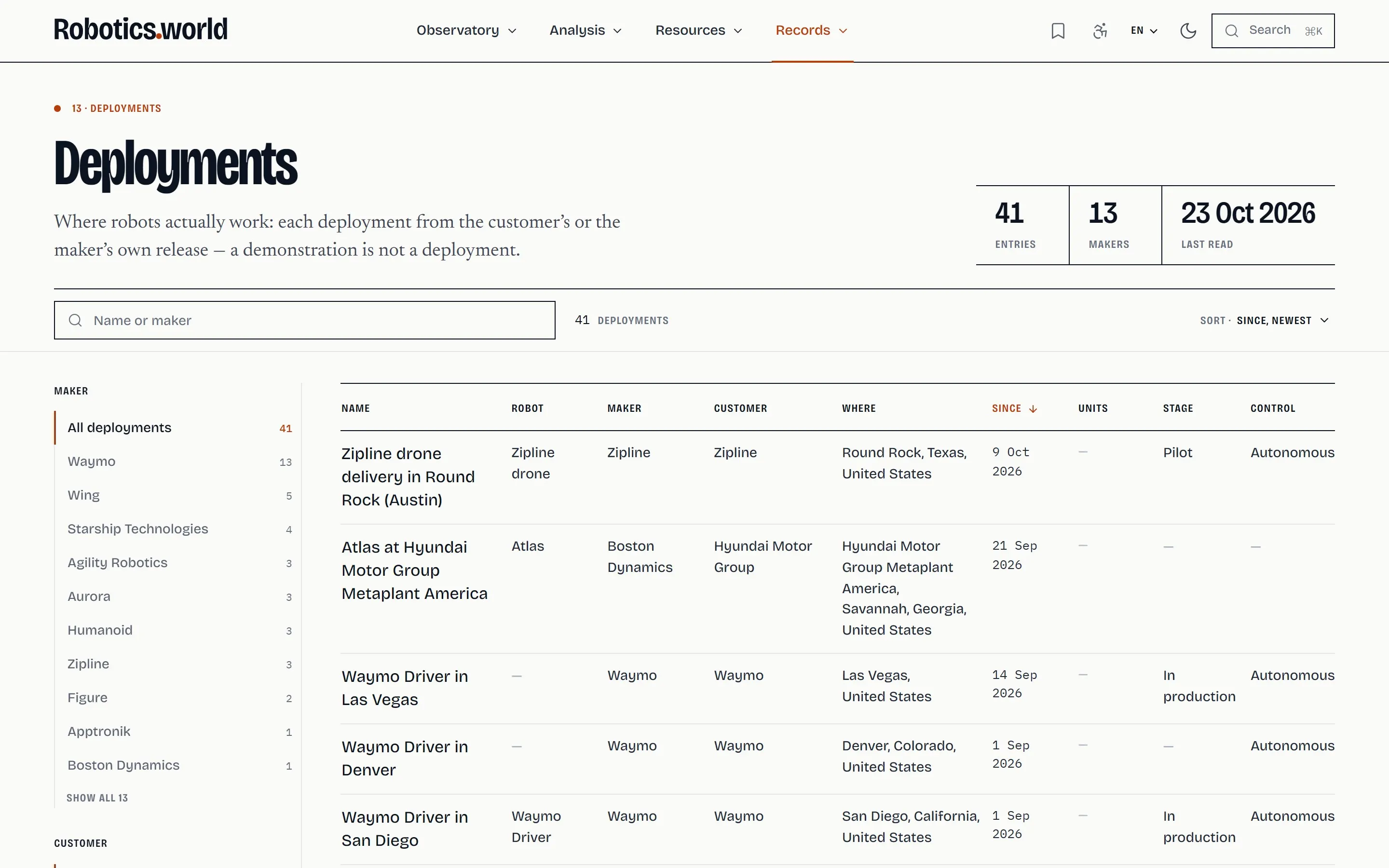
- Deployments: where robots actually work, each from the customer’s or the maker’s own release, with the robot, the customer, the place, the stage and how it is controlled.
The design
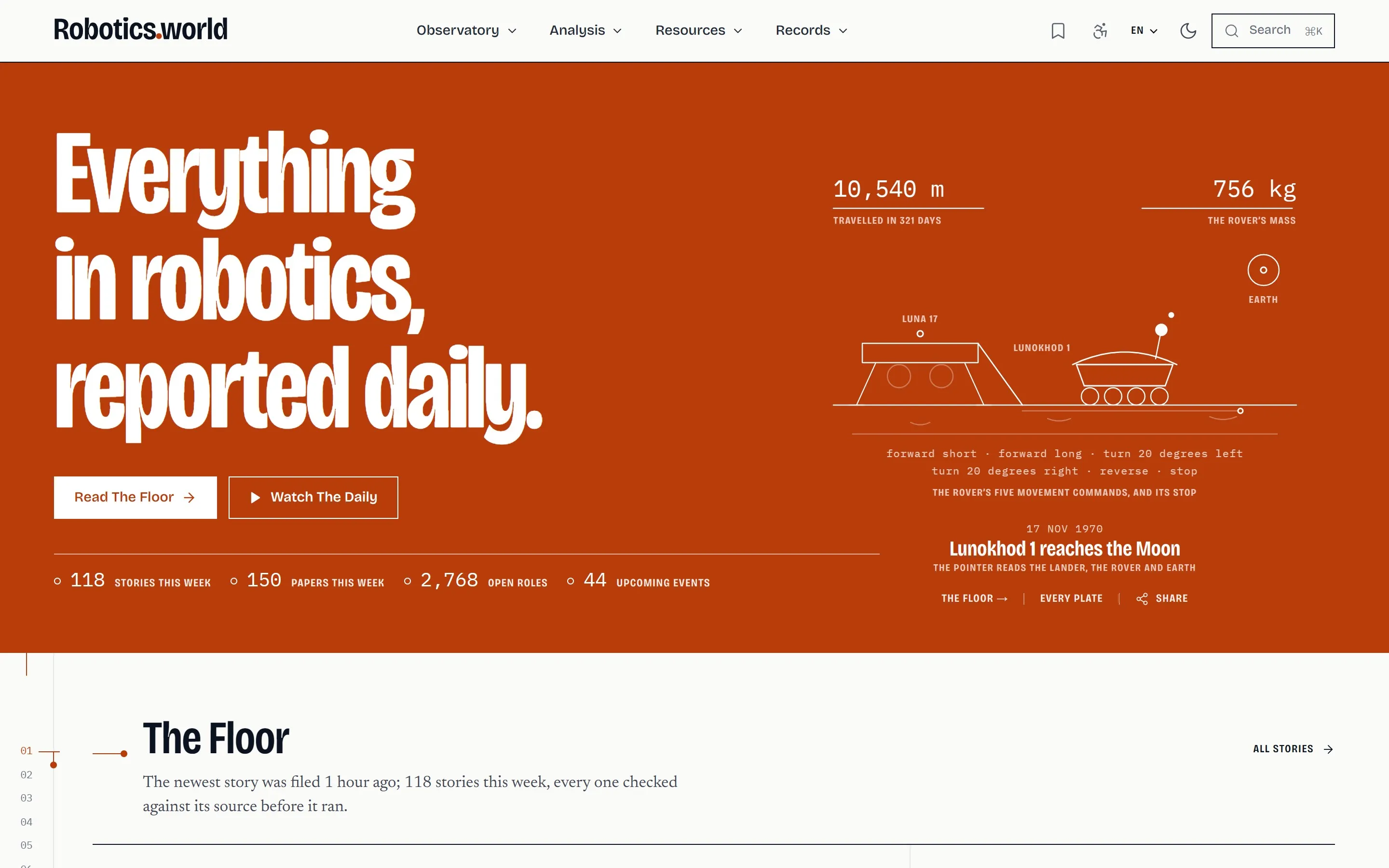
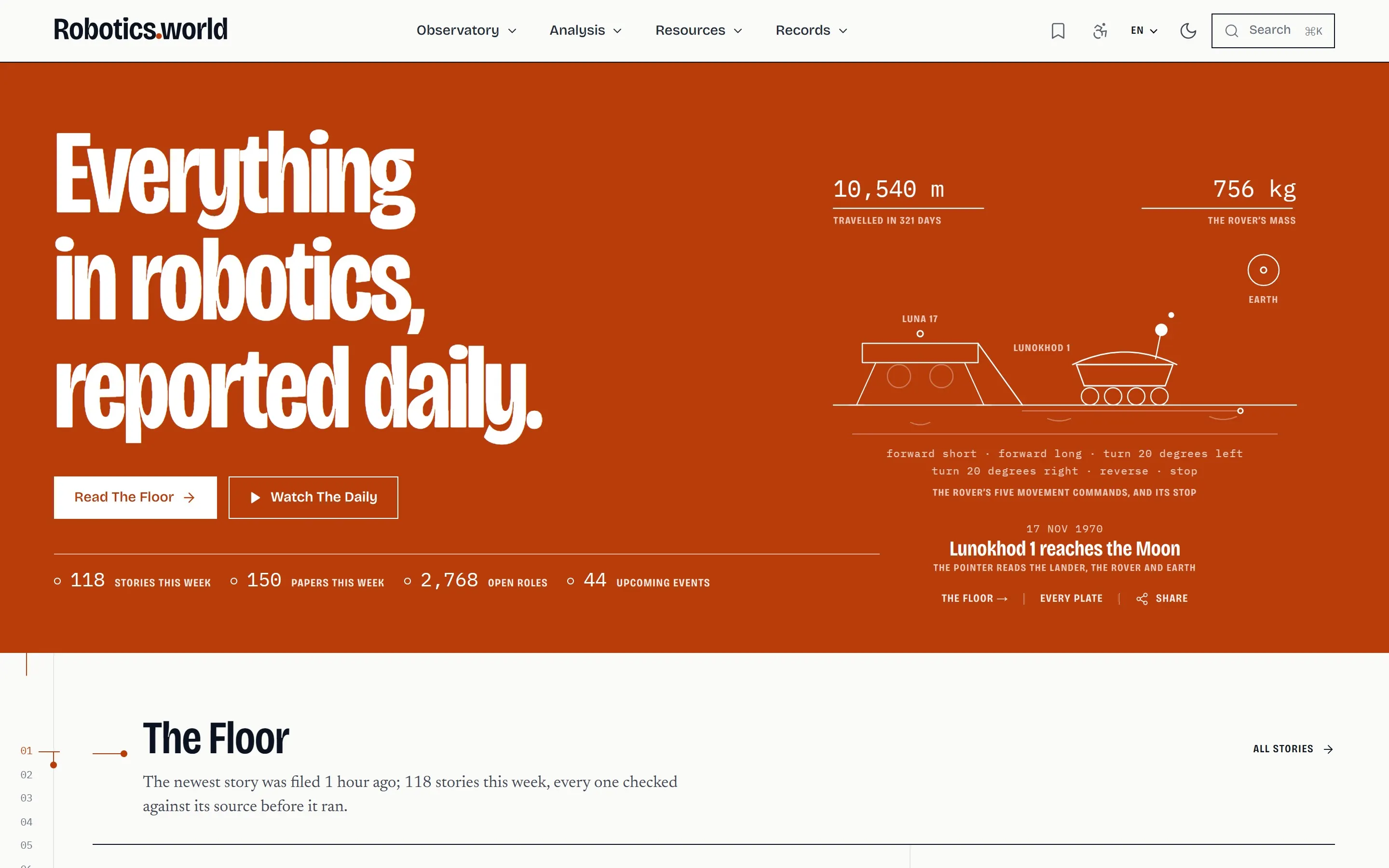
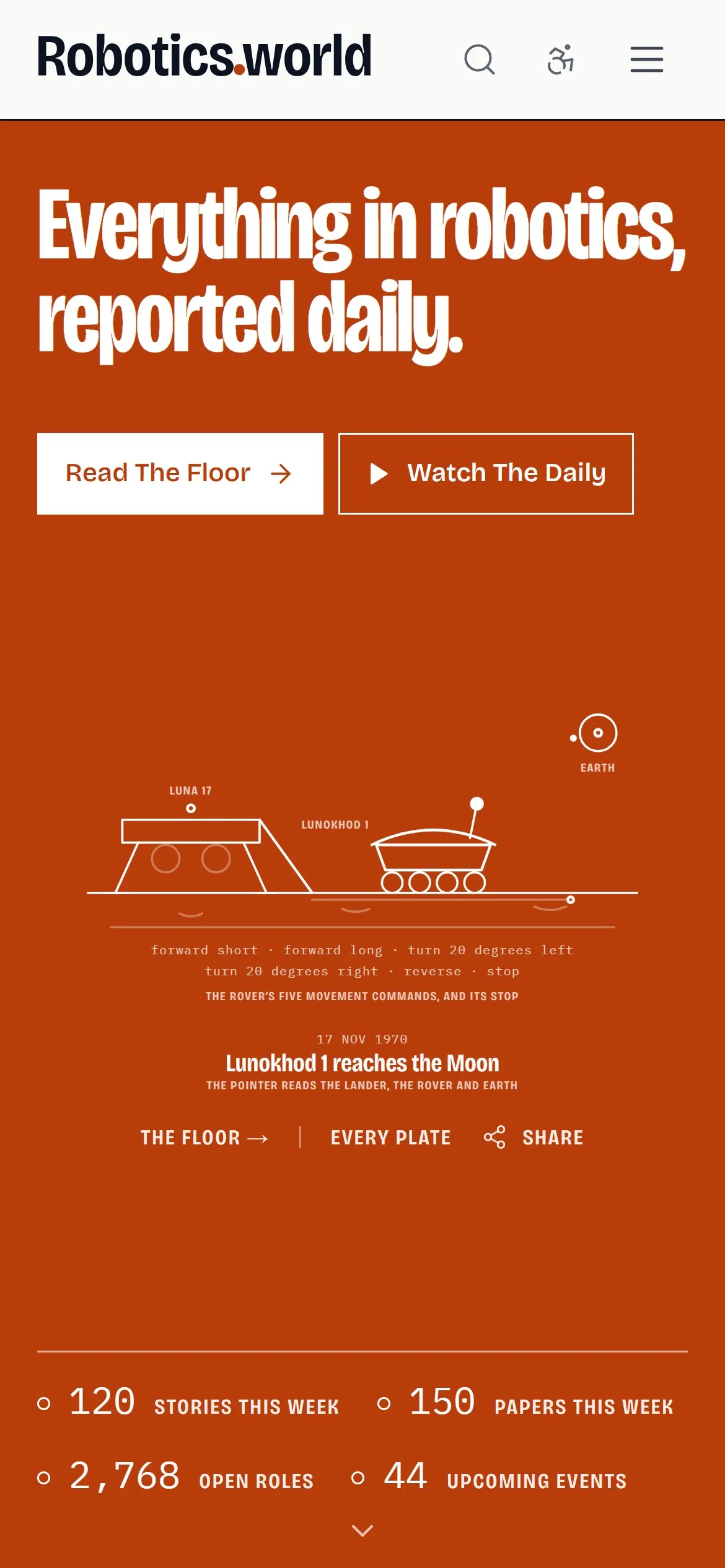
The system is shared; the voice is not. Robotics.world opens in burnt orange, with a drawing of Lunokhod 1, the first rover to drive on the Moon, and calls its news the Floor. Its tables carry a column most robotics coverage leaves out: control, the answer to was anyone driving?
Outcomes
- 4,072public pages, sitemap 2026-11-21
- 55humanoid robots in the tracker, from 32 makers
- 41deployments, each from a customer’s or maker’s release
- 6desk rules kept by every story and entry
Read on the live site on 23 October and 17 November 2026: the sitemap, the registers and the About page.
The lesson travels beyond robotics: when a field’s main medium is persuasive, the design of a publication has to add the questions the medium hides — and give them a column of their own.
Explore the project
robotics.world
A publication on robotics and physical AI that tracks which robots are built, announced and actually deployed.
Sources for this case study
- Robotics.world — About (the desk’s rules, the records)
- Robotics.world — Humanoid Tracker
- Robotics.world — Deployments
- Robotics.world — How we work
Everything described here can be checked on the live project. Figures were read on 21 Nov 2026; screenshots are captures of the public site.