A compass, a plan and a legend
A reference on feng shui, drawn north up in one notation, where every claim is labelled as tradition, school, interpretation or evidence.
Introduction
FengShui.info calls itself “a reference for the arrangement of space”. It explains feng shui through orientation, the Five Elements and the Bagua, room by room and problem by problem, in English. Its footer carries one credit on every page: Edited and drawn by Gabriele Masetti, FIG’s founder.
On 18 November 2026 its sitemap listed 126 pages. Behind them sit 37 essays, 10 rooms, 51 guides, the eight directions, the five elements, an interactive bagua, a glossary of 183 terms, a bibliography of 189 works and, by the site’s own count, 305 drawings.
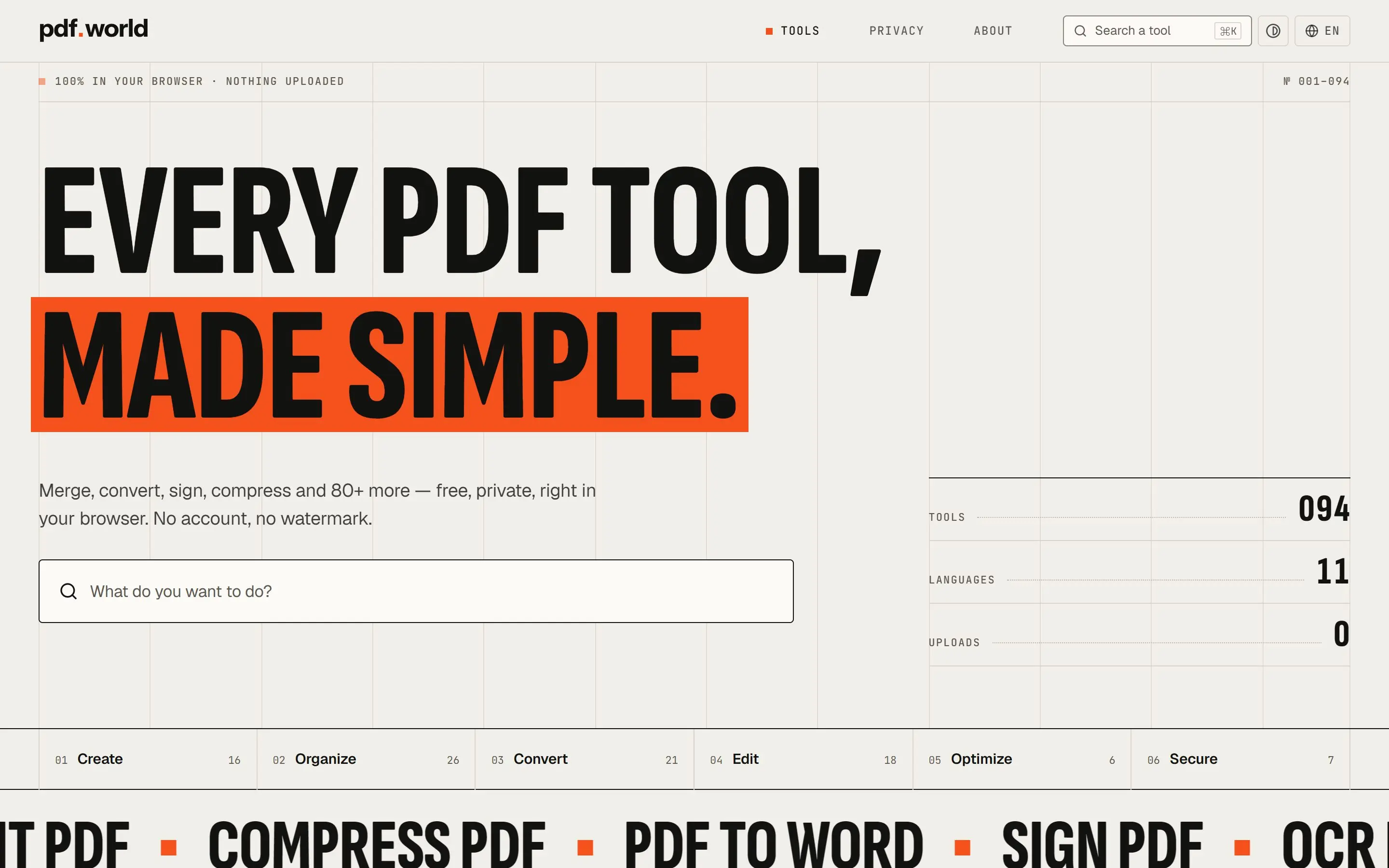
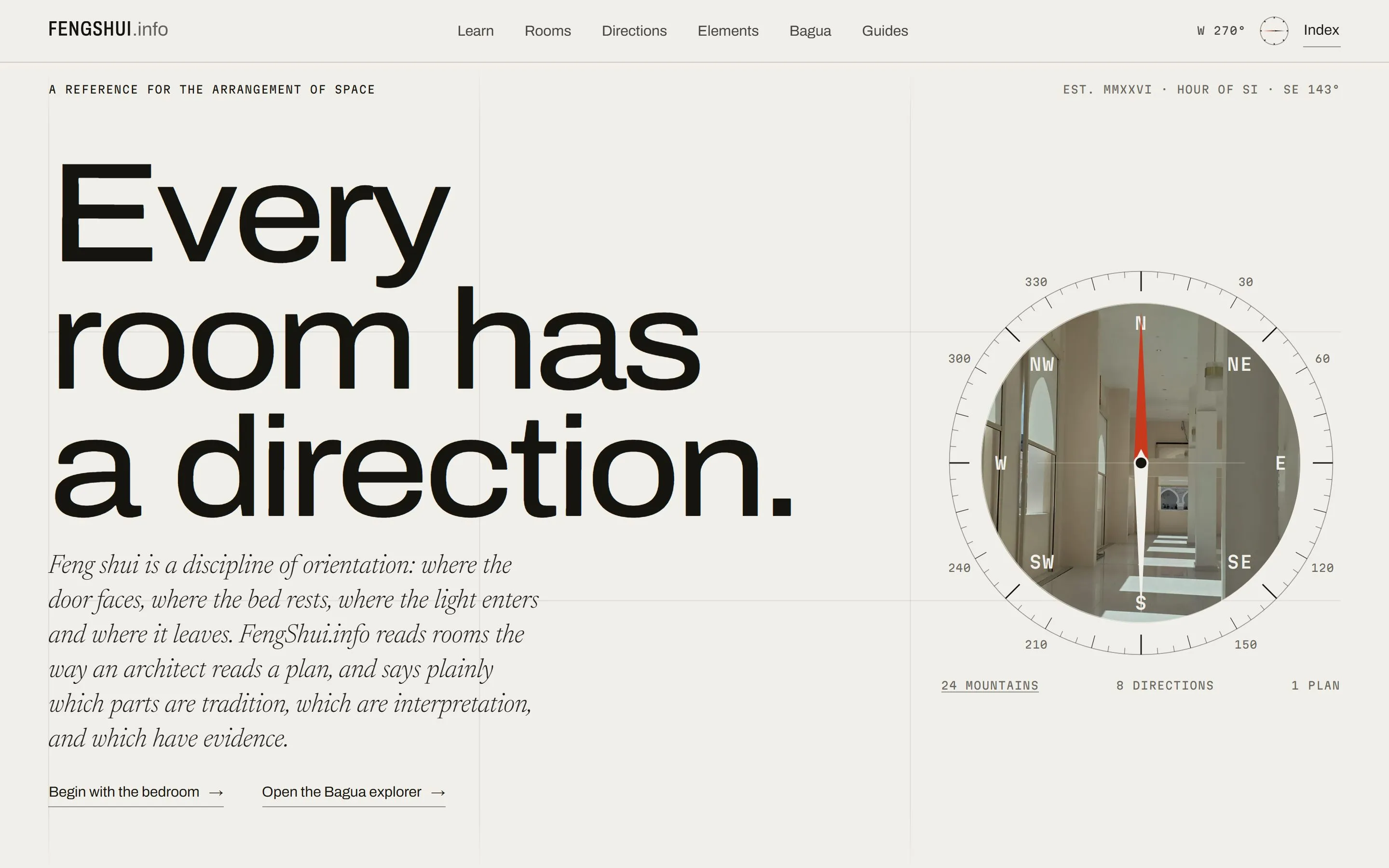
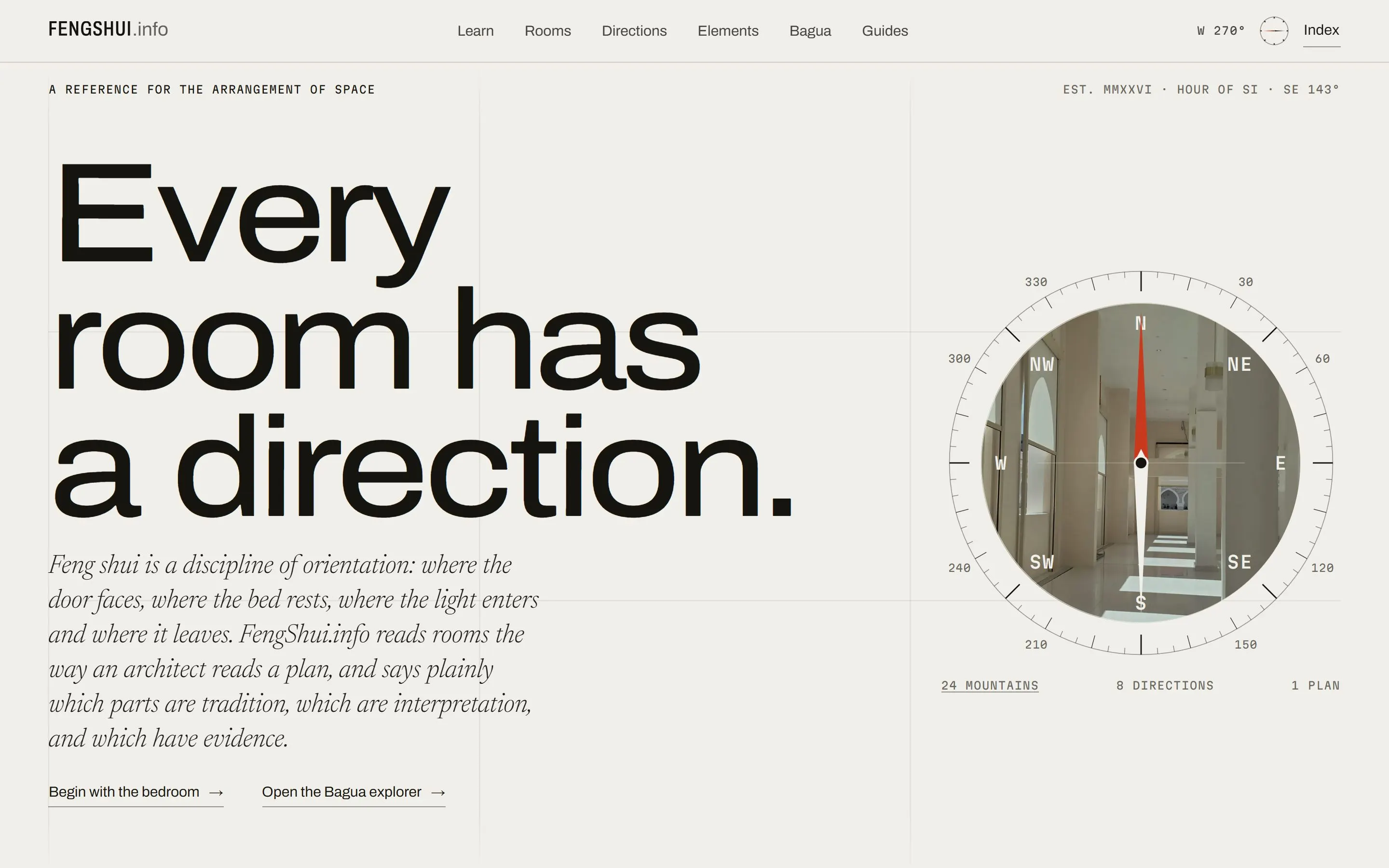
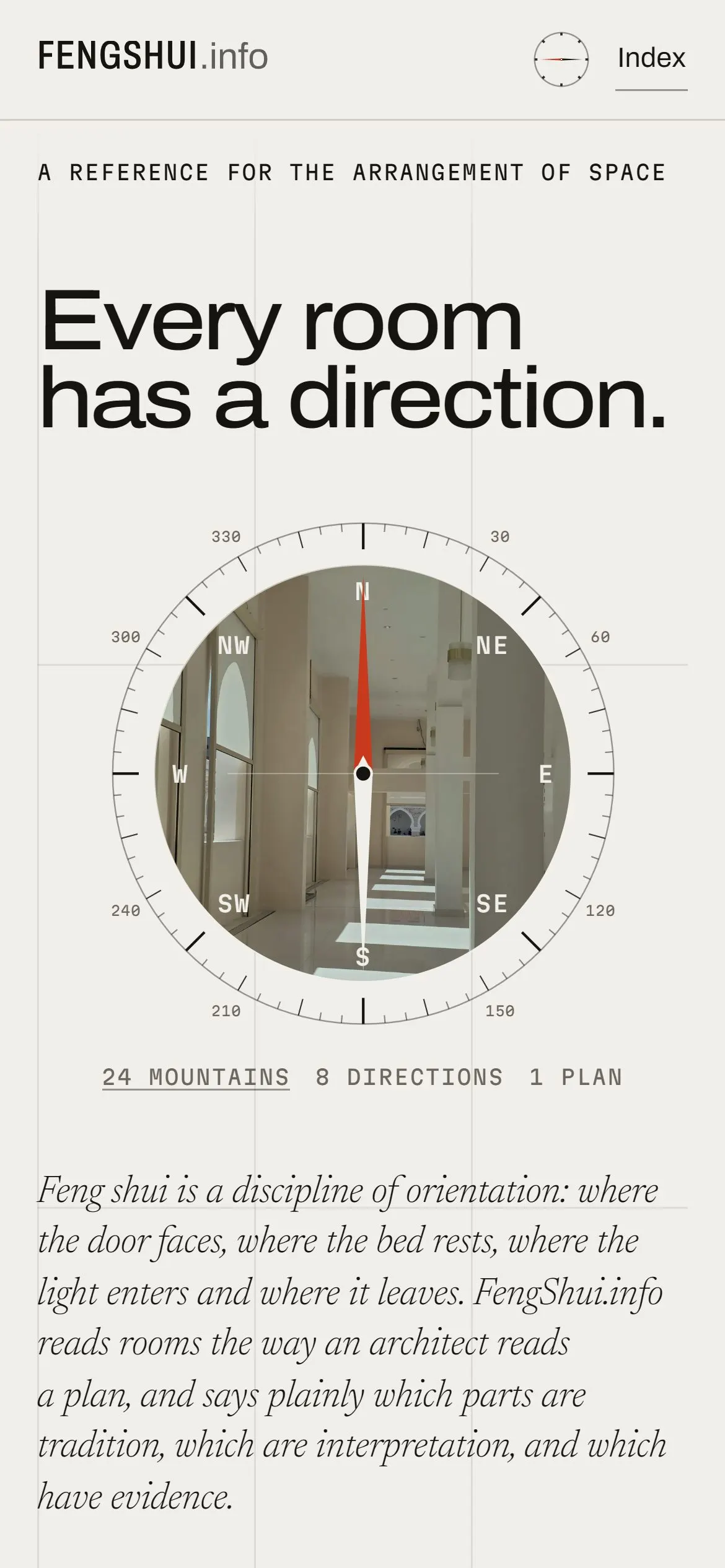
The front page states the premise in five words — every room has a direction — and the method in one sentence: the site reads rooms the way an architect reads a plan, and says plainly which parts are tradition, which are interpretation, and which have evidence. This case study is about how that sentence became a design.
The challenge
Feng shui is an unusual subject to publish honestly. It is, at once, a cosmology more than two thousand years old, a set of modern schools that disagree with one another, a body of practical sense about light and shelter, and a subject on which a small amount of real research bears. Most writing about it blends the four, so that a study of light at night ends up supporting a “wealth corner”, or the wealth corner is used to dismiss the study.
The site’s methodology names the risk directly: a Tang-dynasty siting text, a 1996 paperback and a sleep study are three different things, and the site tries never to let one borrow the weight of another.
The design problem, then, was two problems. A reader needs to be able to find their way through a large, technical subject — directions, trigrams, phases, schools — without a background in any of it. And on every page, a reader needs to know what kind of sentence they are reading, before deciding how much weight to give it.
The concept
Three instruments organise the whole site, and each is borrowed from the subject itself.
- The compass. Orientation is the one part of the tradition that can be measured, so it becomes the site’s navigation. A dial sits in the header of every page, and every page has a bearing.
- The plan. Rooms are explained as an architect would explain them: drawn, north up, in a single notation, with the arrangement the tradition avoids drawn as a ghost beside the one it recommends.
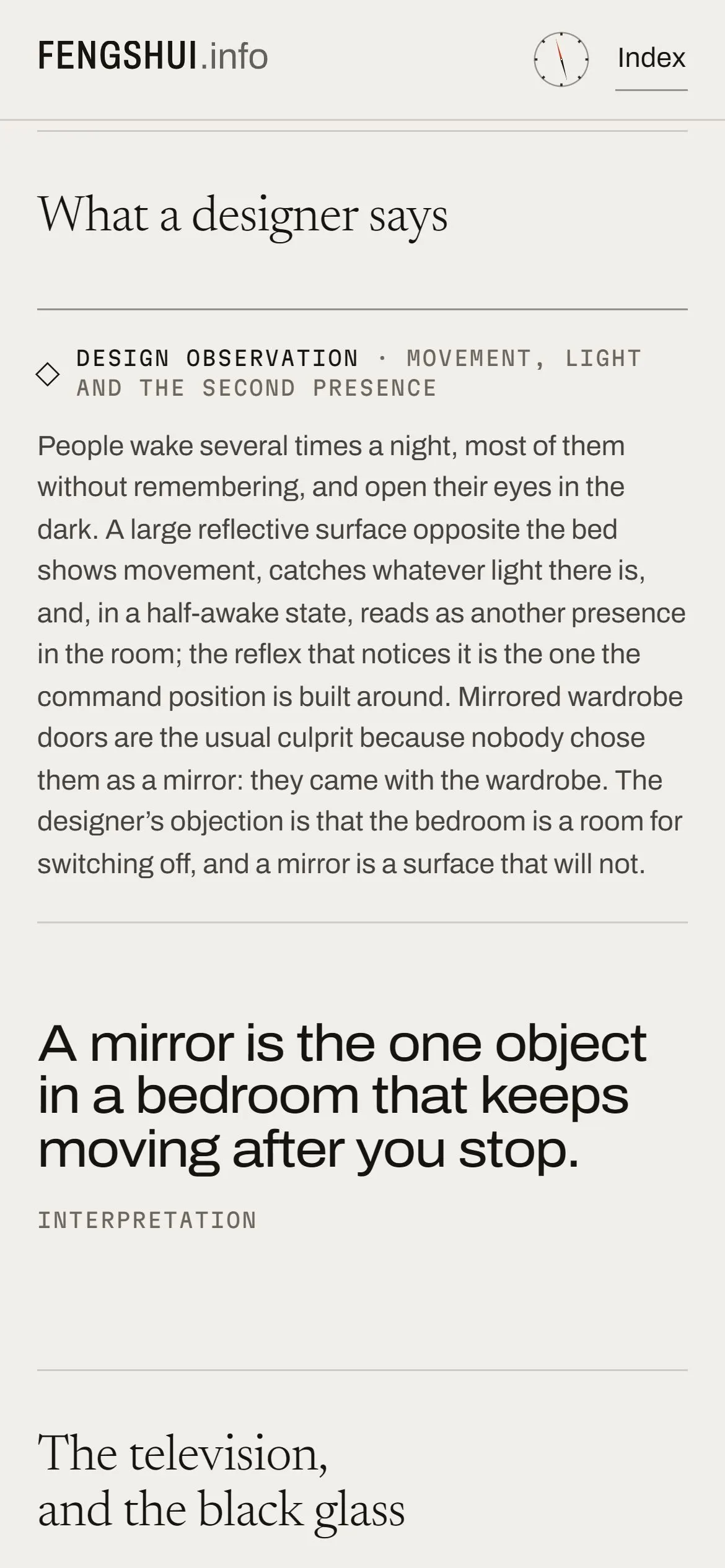
- The legend. Every claim is labelled by its source. The methodology sets out six kinds — tradition, school, interpretation, design observation, evidence and misconception — each with its own symbol, and they “mean the same thing everywhere on the site”.
The studies say that rooms matter. They do not say that the compass does.
The essay that sentence comes from states the rule behind the legend: six labels, one claim each, and no averaging. A tradition note is not made truer by a study on the same page; an evidence note names its study, says what it found and what it did not, and is not stretched to cover the tradition’s neighbouring claims. Where a room rule and a finding agree, the site says so under both labels, so the reader sees two routes to one conclusion rather than one proving the other.
The design
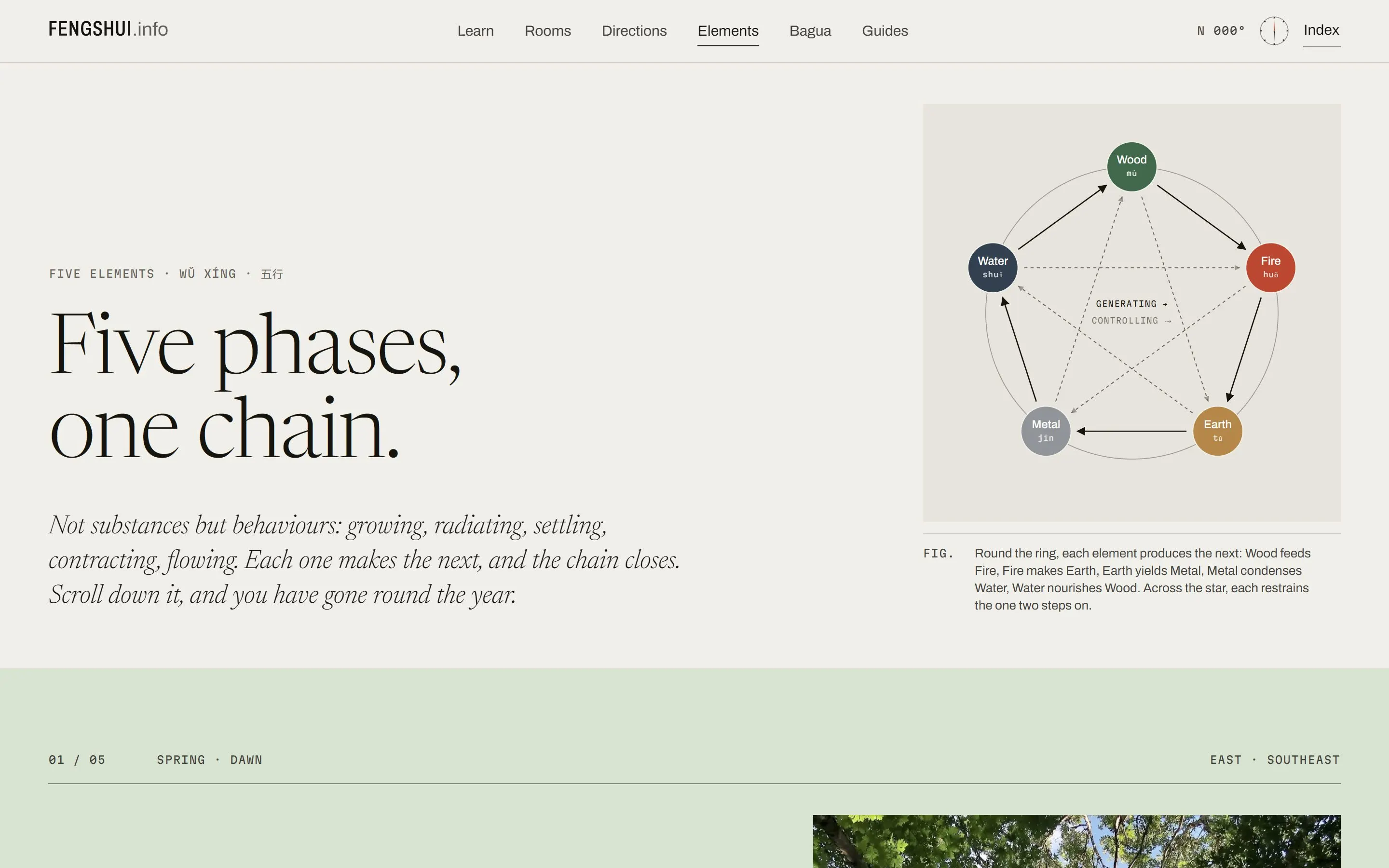
Three voices. Archivo, a grotesk, carries the headlines and the interface; Newsreader, a serif, carries the reading text and the italic introductions; Martian Mono sets everything that is a measurement or a label — bearings, sectors, reading times, figure numbers, the names of the six kinds of claim. The palette is paper and ink, with one red borrowed from a compass needle, and a colour for each of the five elements that appears only where an element is meant.
Labels you can see at a glance. Each article opens with a margin column: the contents, the legend of six symbols — a filled circle for tradition, a half-filled one for a school, an open circle for interpretation, a diamond for a design observation, a hatched square for evidence, a struck-through circle for a misconception — and a button to print the page. In the text, every note begins with its symbol and its kind in small capitals: Tradition · The mouth of qi, School · The door and the bagua, Misconception · A north-facing door is unlucky. Even the large pull-quotes carry a label underneath; on the mirror guide, the line about the one object that keeps moving after you stop is marked Interpretation.
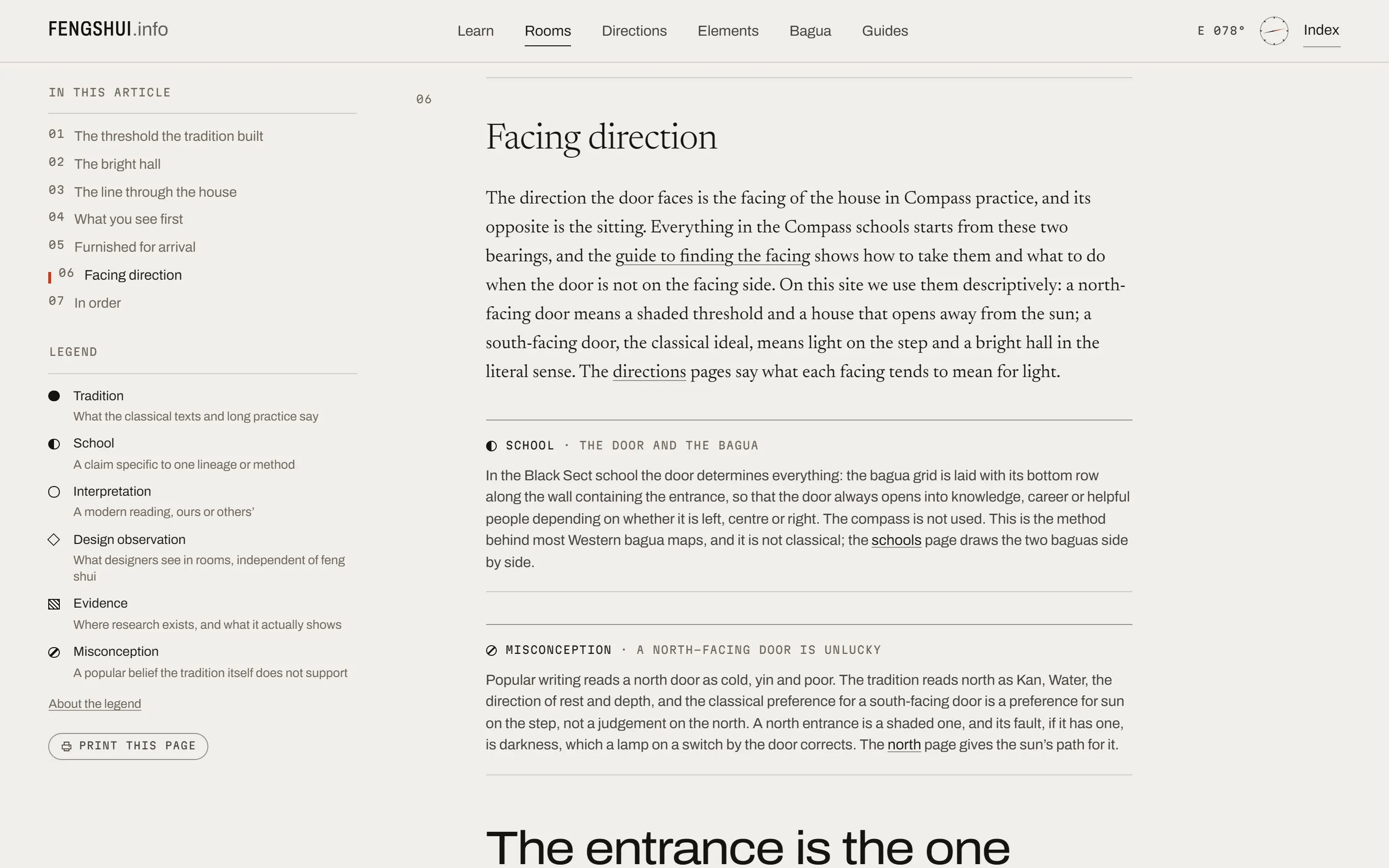
The site even labels its own thesis. On What is feng shui?, the idea that feng shui is best understood as “a grammar of orientation” is set under Interpretation, introduced as “our own position, offered as interpretation”.
One notation for every drawing. The methodology gives the key: walls, doors with their swing, windows as gaps in the wall, furniture as soft grey shapes with a line where the head or the back goes, one sight line to the door, the door’s line hatched, the avoided arrangement ghosted, and the recommended point in red — “the only colour the drawings use”. Every plan is drawn north up. The drawings page gathers all of them in one place, under the heading The tradition, drawn.
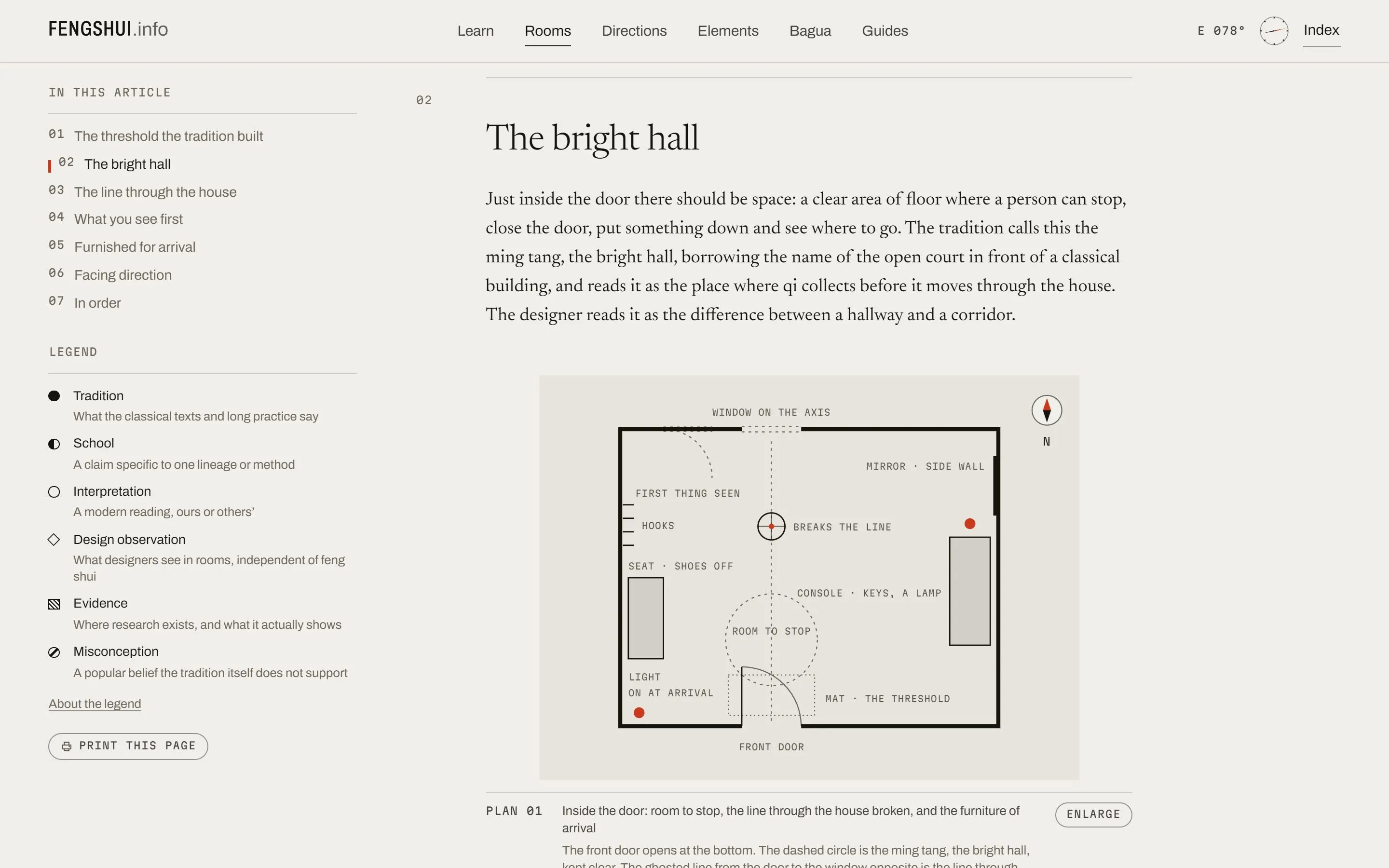
Captions are written to teach. Each drawing has a numbered caption that says what the figure shows, and a second, quieter paragraph that says how to read it — on the mirror guide, that the rays are drawn “the way a physics lesson draws them”. Any drawing can be enlarged into a zoom view from the button in its caption.
The experience
A compass that travels with you. The header dial and its readout — N 000°, E 078°, SE 135° — change with what is on screen. Each article has its own bearing and element: the Entrance is Oriented E 078°, Wood; the mirror guide is Oriented N 345°, Water. On the front page, hovering one of the eight directions turns the needle to it; in the Bagua Explorer, choosing a sector does the same. The bearing is kept as the reader moves from page to page, and the browser’s view transitions hold the dial in place while the page changes beneath it.
The Bagua Explorer. Turn the ring. Read the room. The page joins three layers in one instrument: the ring of 24 mountains of 15°, the eight trigrams of the Later Heaven arrangement, and the Lo Shu square at the centre, north up, as it is laid over a floor plan. The ring can be dragged or a sector chosen; on a phone, a button lets the ring follow the device’s compass, with the instruction to hold the phone flat and turn toward a wall. Each sector gives its trigram, element, season and hour, colours, Lo Shu number and the hours of sun on a wall facing that way.
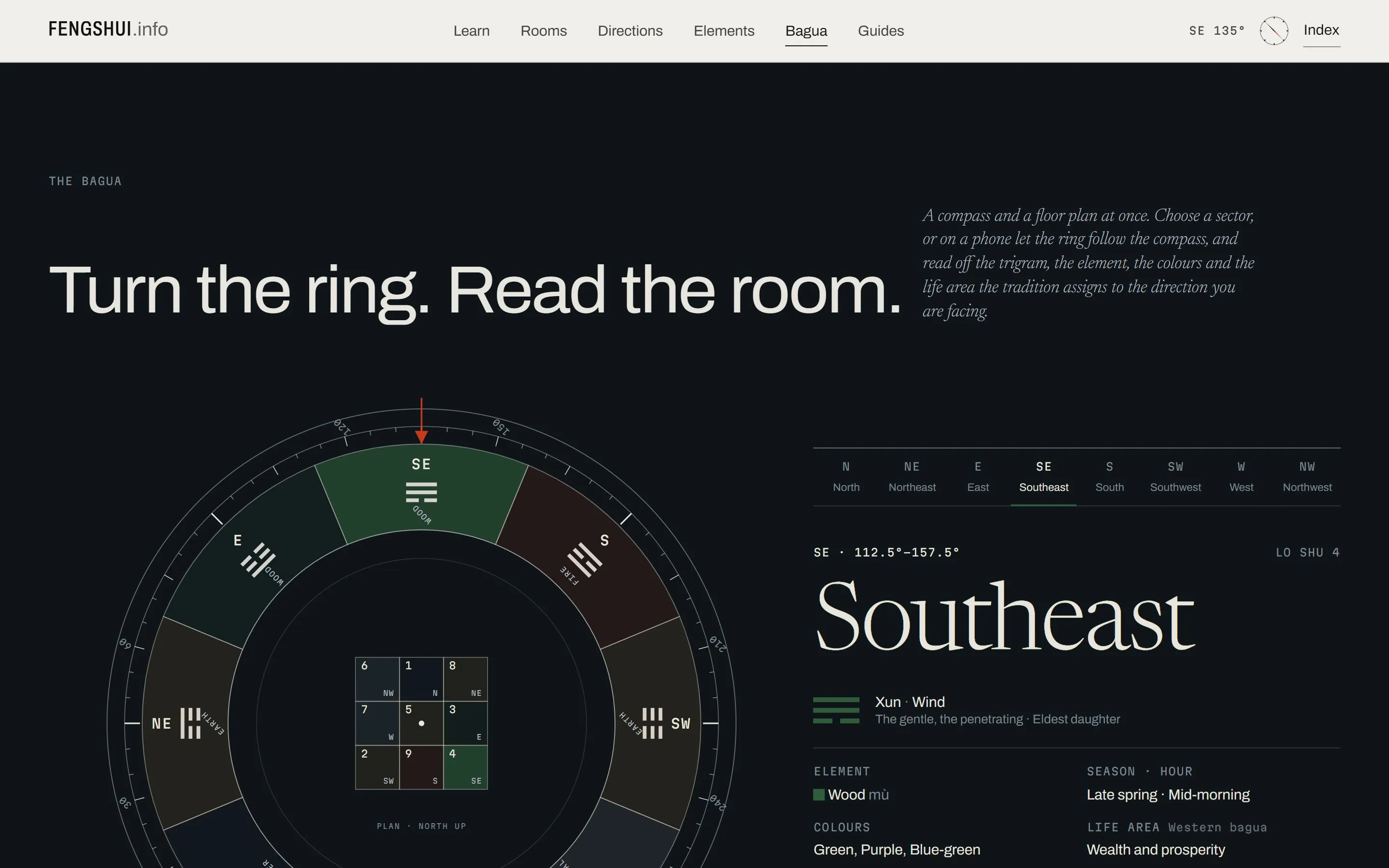
The explorer is careful about what it does not do. The life areas — career, wealth, relationships — are labelled as the Western bagua of the late twentieth century, shown “because you will meet them everywhere”. And its last line is plain: the bearing is yours, and the explorer computes nothing about fortune from it.
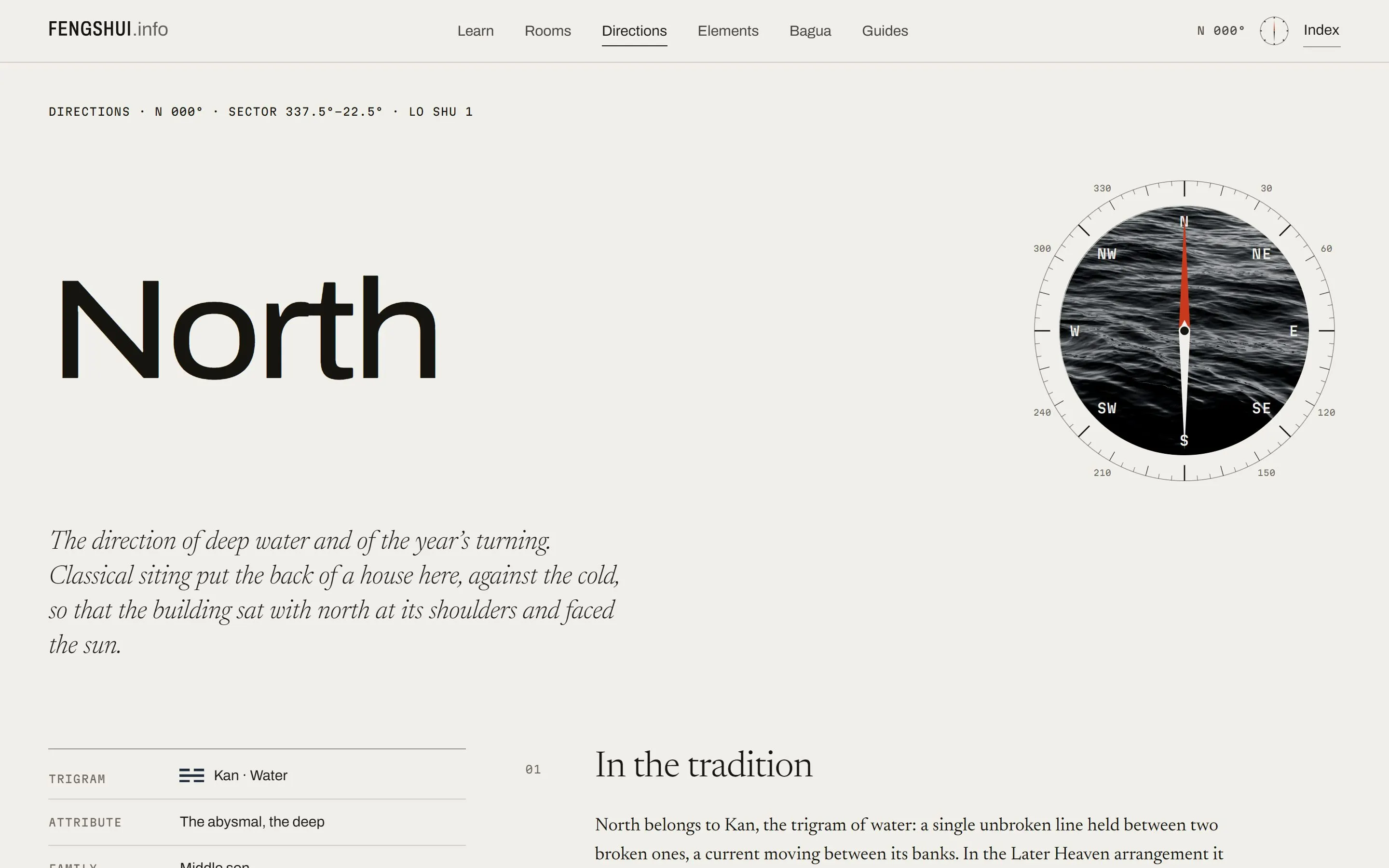
Directions, measured. Each of the eight direction pages pairs the tradition’s reading with something that can be drawn exactly: the sun. North gives its trigram, element and life area, then a sun-path drawing for a wall facing north at 45° north, in June, at the equinoxes and in December — and a note on what the drawing is not.
A geometric model, not a forecast.
Ways in. The front page offers three: a specific problem, the system before anything is moved, or the direction of one’s own rooms. The rooms are arranged not alphabetically but along the house’s gradient, from the bright, public entrance to the dark, still bedroom — from the door to the pillow — each with a verb: approach, arrive, move, cook, eat, gather, work, wash, grow, rest. For readers who would rather be led, nine reading paths give sequences of 9 to 20 articles, each with its reading time, from Start here to Places that are not homes.
The system
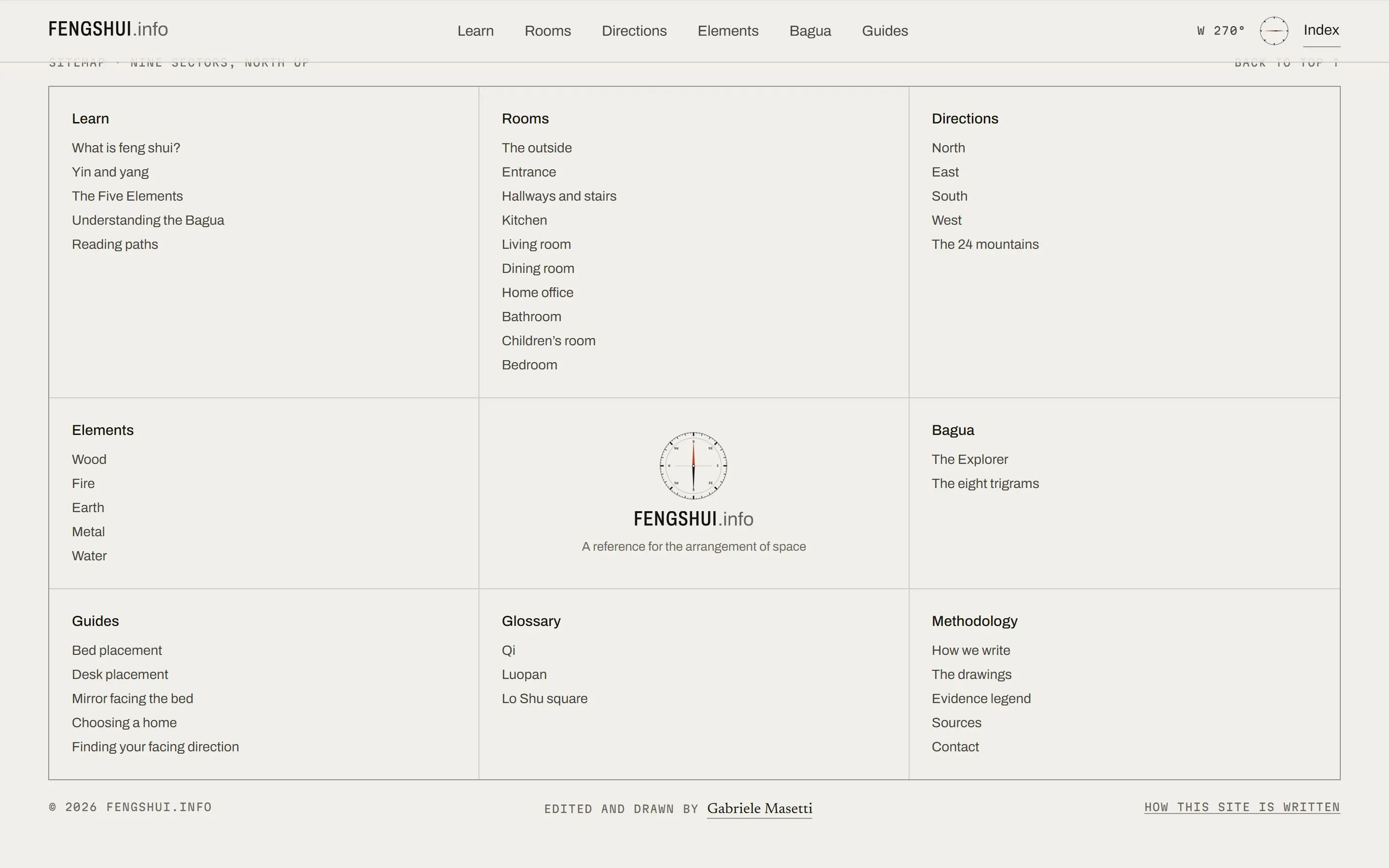
The structure of the site is drawn the way the site draws a house. The footer is a sitemap titled Sitemap · nine sectors, north up: a grid of three by three, the nine-square plan the Bagua page lays over a floor plan, with Learn, Rooms, Directions, Elements, Bagua, Guides, Glossary and Methodology around a centre that holds the compass and the name. The Index in the header opens the same nine sectors on a dark sheet, with a search field — “a room, a rule, a term”.
Underneath, the editorial apparatus is consistent from page to page:
- Sources on every article. All 98 essays, room pages and guides end with Sources for this article, numbered, each work annotated with what it is used for — Lillian Too’s manual, for instance, “as a record of what the popular tradition says, not as an authority on what the classical one does”.
- A bibliography by kind of authority. The sources page sorts its 189 works into primary texts, scholarship, early Western accounts, practitioner manuals and research, under a stated policy: only works that exist and can be described accurately, no page numbers unless verified, no invented quotations.
- Computed, not copied. The year page gives the almanac’s four moving sectors for 48 years, 2000 to 2047, computed from the cycle rather than transcribed from a table, and ends by saying that nothing on it is a claim that a year does anything to a household. The sun paths are computed from a stated geometric model.
- A ledger of the evidence. Evidence and feng shui sets the tradition’s claims against the strongest kind of study that bears on each, and marks four — bed direction and sleep, kua directions, Flying Star charts and wealth corners — as no study.
Every claim of the tradition is reported, and none is endorsed. The methodology puts it simply: the site is a reference, not a practice — it offers no consultations, calculates no personal numbers, sells nothing and promises no outcomes.
Details
- Print. Pages with a print button print to a clean sheet in black on white, without the header, footer or margin furniture.
- Wide drawings on small screens. A drawing or table wider than the screen becomes a focusable panel that says it can be scrolled sideways.
- Motion with restraint. The needle settles like a real one, overshooting and coming to rest; reveals and the unrolled compass tape follow the scroll. All of it stands still for readers who ask for reduced motion.
- Characters and their sounds. Terms carry their Chinese characters and pinyin — 五行 wǔxíng, 氣口 qìkǒu — and each article closes with the concepts it uses, defined once.
- The hour on the front page. The line above the dial — Est. MMXXVI · Hour of Si · SE 143° — names the current double hour and turns the time of day into a bearing.
Outcomes
- 126pages in the sitemap, 18 November 2026
- 305drawings in one notation
- 189works in the bibliography
- 183terms in the glossary
- 6kinds of claim, each with its symbol
- 9reading paths
Read on the live site on 18 November 2026: the sitemap index, the Drawings, Sources and Glossary pages, the Methodology and the Reading paths.
FengShui.info publishes no audience figures, and this case study claims none. Nor does it make any claim for feng shui itself: the site is careful to report what the tradition says without saying it works, and so is this page.
What it demonstrates is a way to publish a contested subject without either selling it or sneering at it. Give the reader the instruments the subject already uses — a compass, a plan — and add the one it never had: a legend that says, before every paragraph, what kind of knowledge is about to be offered.
Explore the project
fengshui.info
A reference on feng shui, drawn north up in one notation, where every claim is labelled as tradition, school, interpretation or evidence.
Sources for this case study
- FengShui.info — Home
- FengShui.info — Methodology (How we write about feng shui)
- FengShui.info — Evidence and feng shui
- FengShui.info — The Bagua Explorer
- FengShui.info — North
- FengShui.info — The entrance
- FengShui.info — The mirror facing the bed
- FengShui.info — The Five Elements
- FengShui.info — Drawings
- FengShui.info — Reading paths
- FengShui.info — Sources
- FengShui.info — Sitemap index
Everything described here can be checked on the live project. Figures were read on 21 Nov 2026; screenshots are captures of the public site.