Making the invisible legible
A publication on quantum technologies that turns a field of qubits, records and national programmes into something a non-specialist can follow.
Introduction
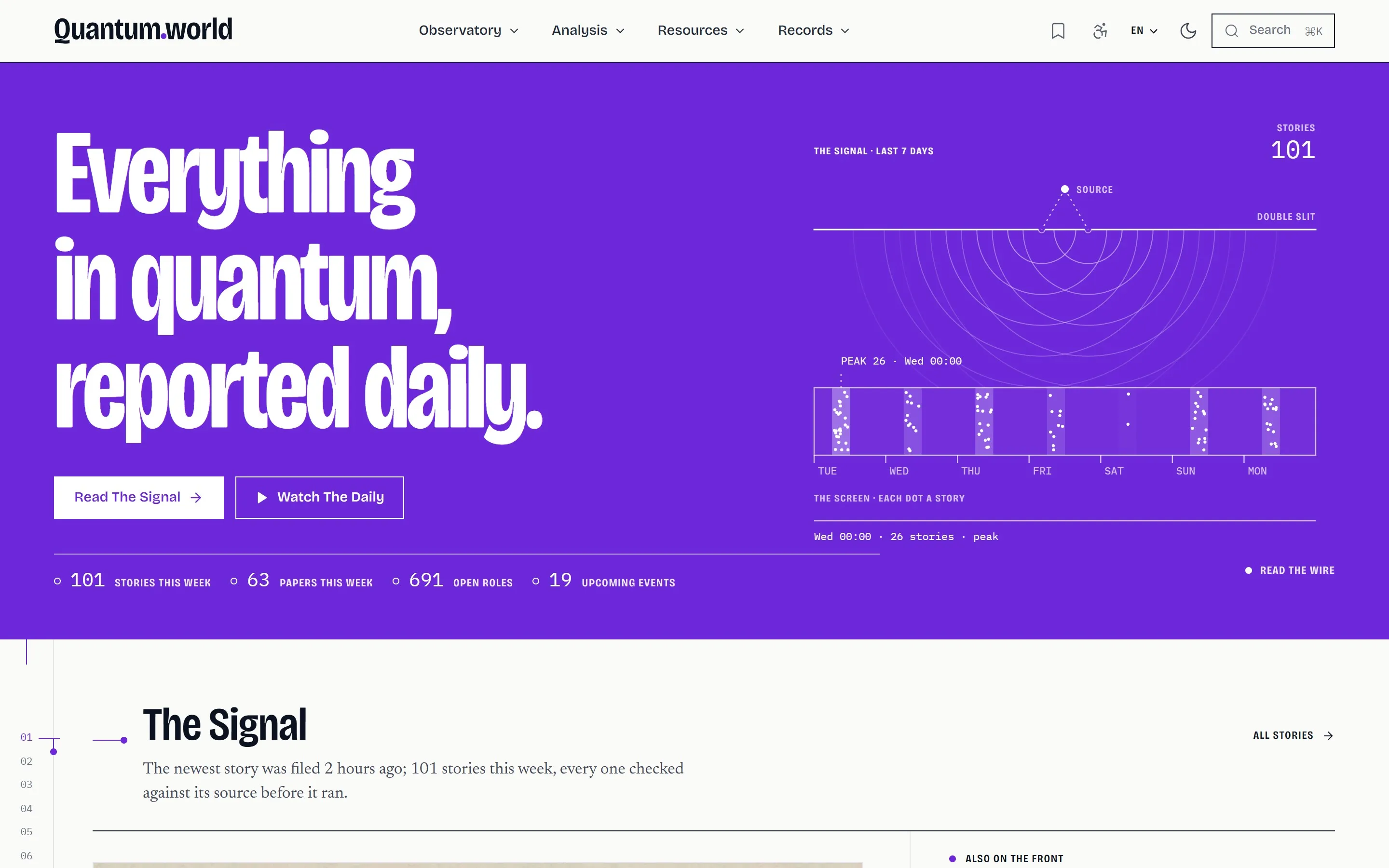
Quantum.world is a publication on quantum technology, in English and in Italian: the news, the research, the companies, the roles and the events of the field — the record of quantum technology, every claim checked against its source.
It runs on the newsroom system designed for AI.info. The design problem specific to it is translation in the broadest sense: turning a field of specialist measures into something a non-specialist can follow without being misled.
The challenge
Quantum computing is reported in numbers that sound comparable and are not. A qubit count says little about what a machine can do; “advantage” is claimed against comparisons nobody publishes; roadmap targets are quoted as if they had been measured; logical qubits are counted under different definitions. For a reader outside the field, every headline is a trap made of real numbers.
The concept
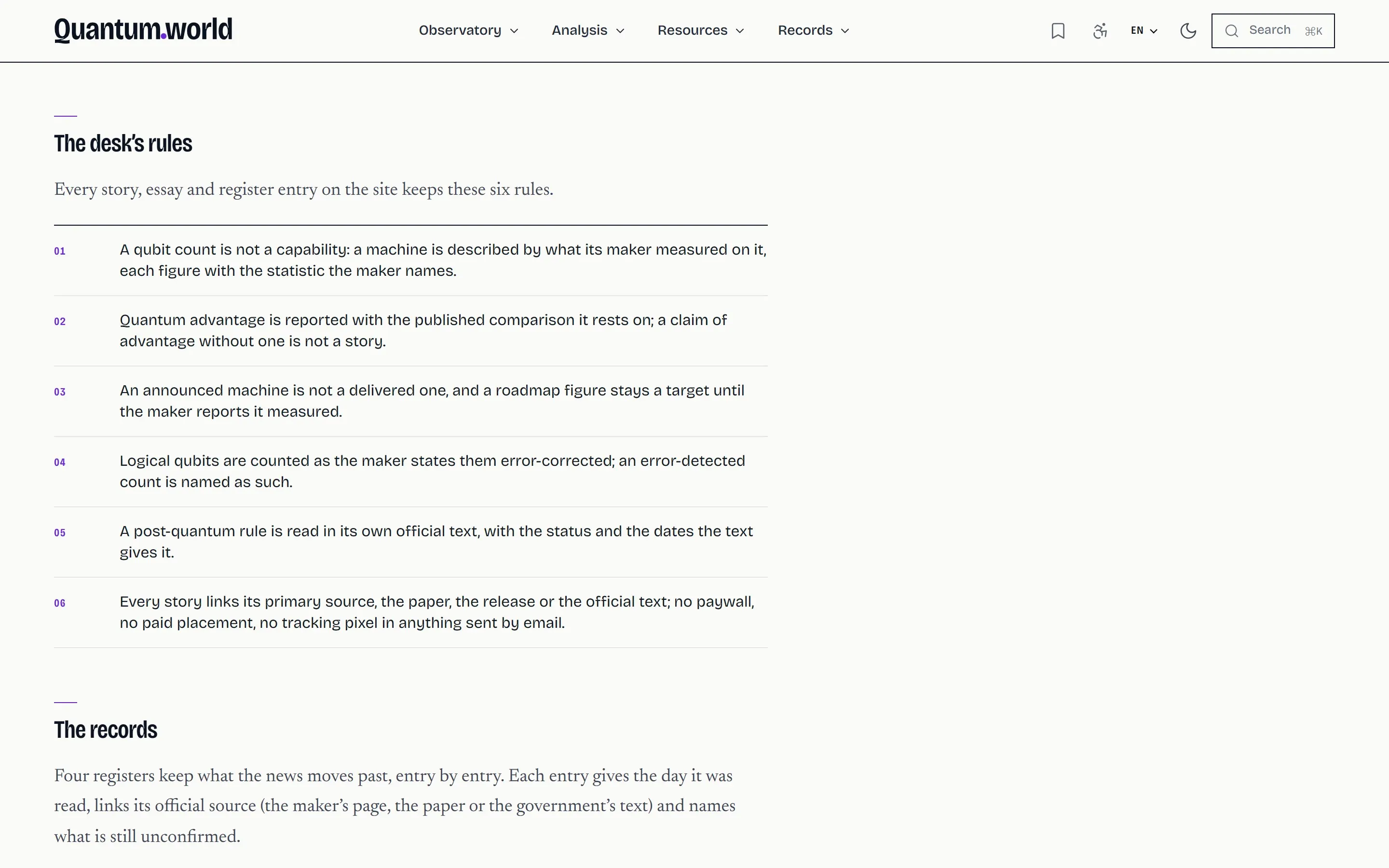
Six rules make the measures honest:
- A qubit count is not a capability. A machine is described by what its maker measured on it, each figure with the statistic the maker names.
- Quantum advantage is reported with the published comparison it rests on; a claim without one is not a story.
- An announced machine is not a delivered one, and a roadmap figure stays a target until the maker reports it measured.
- Logical qubits are counted as the maker states them error-corrected; an error-detected count is named as such.
A qubit count is not a capability.
The records
Quantum.world keeps four registers, each entry with the day it was read, its official source and what is still unconfirmed:
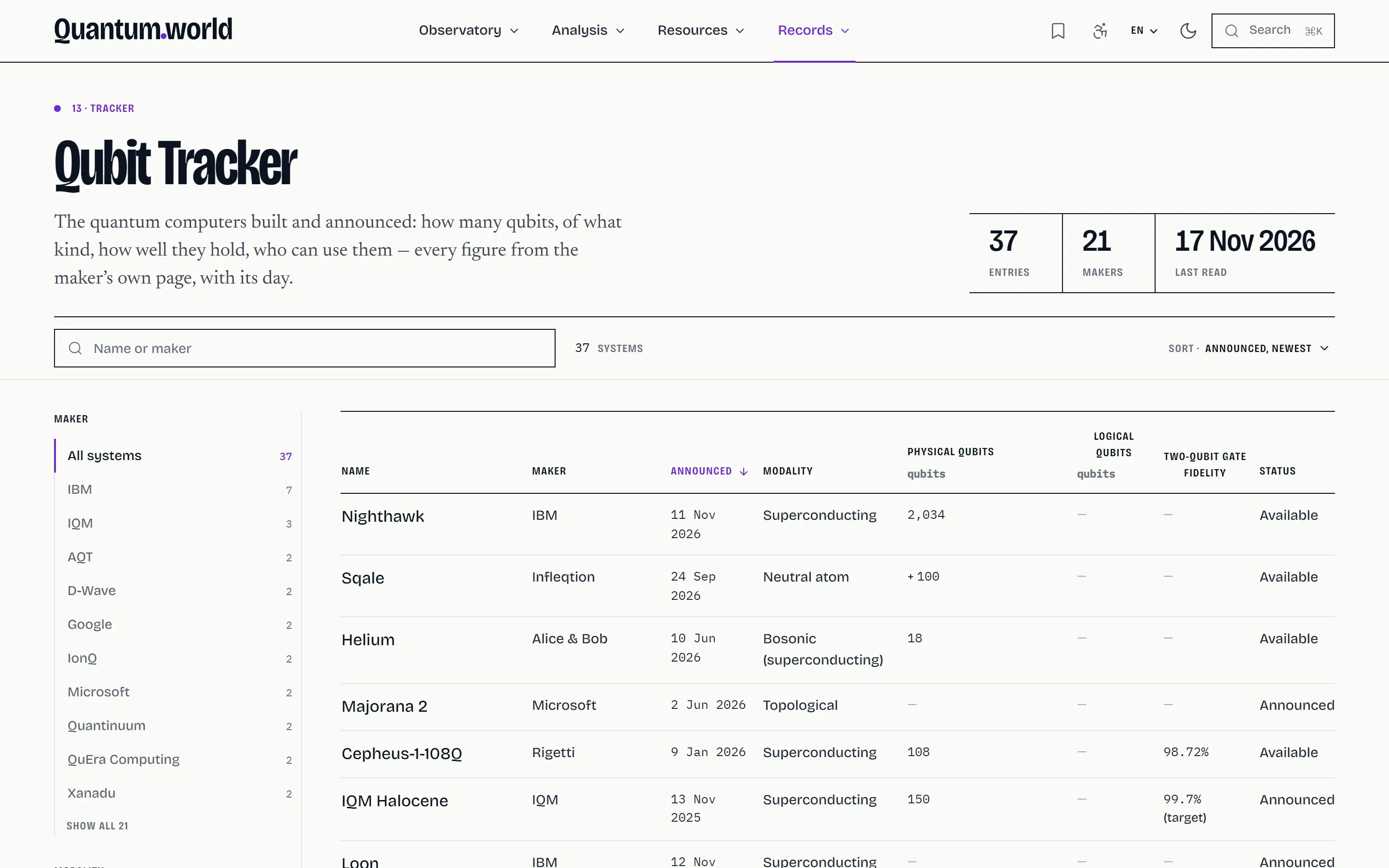
- The Qubit Tracker: the quantum computers built and announced — how many qubits, of what kind, how well they hold, who can use them.
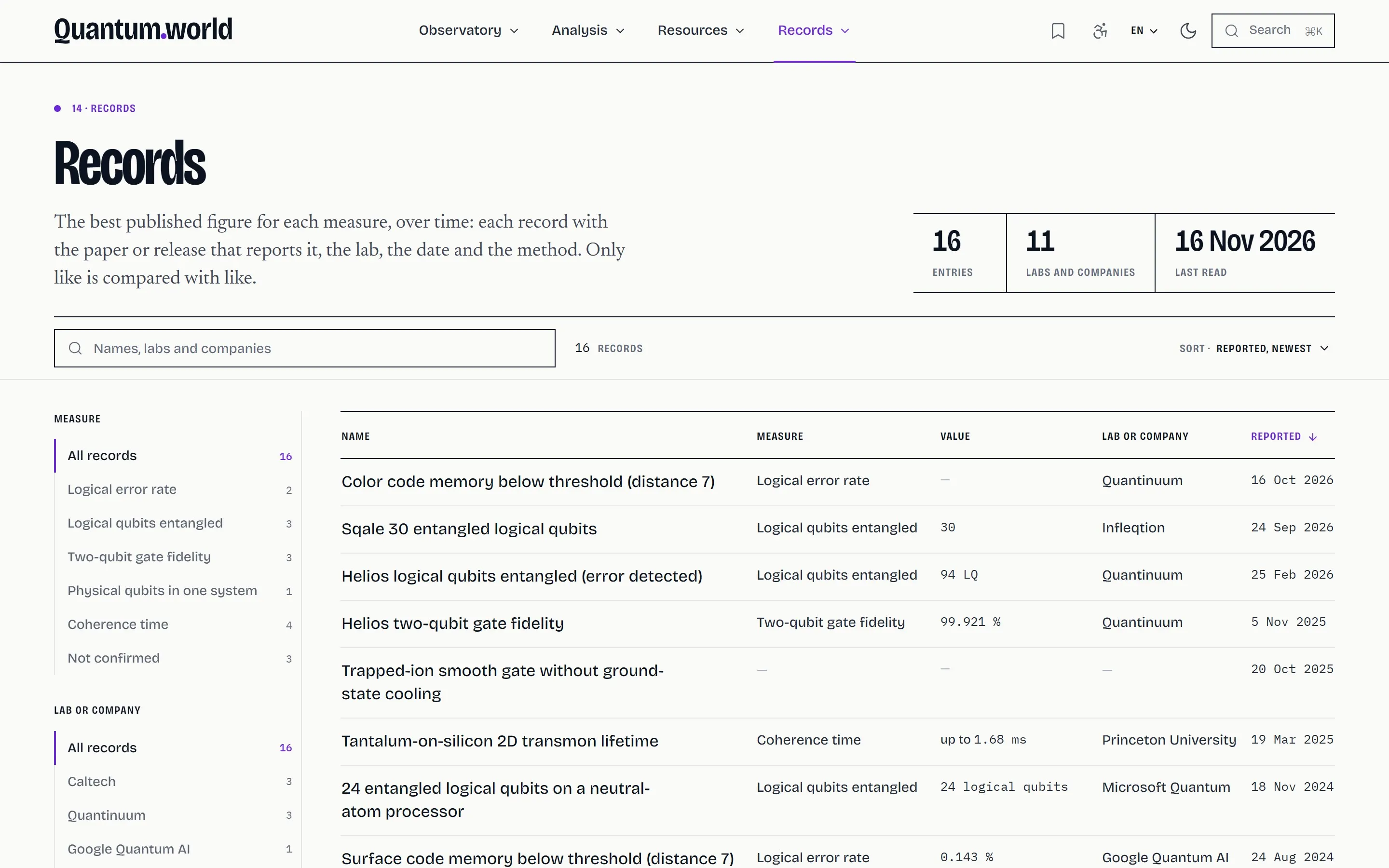
- Records: the best published figure for each measure, over time, each with the paper or release that reports it, the lab, the date and the method. Only like is compared with like.
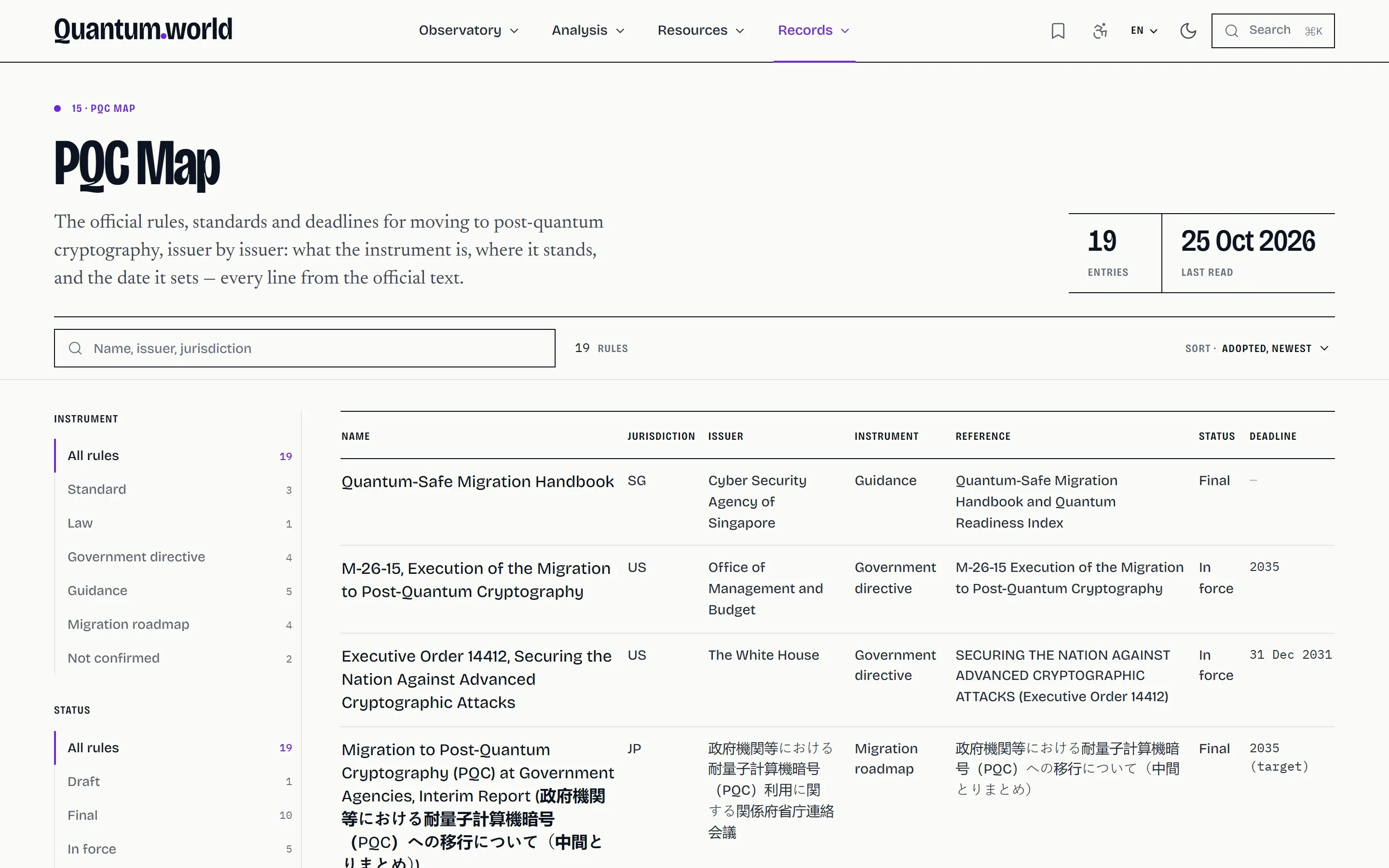
- The PQC Map: the official rules, standards and deadlines for moving to post-quantum cryptography, issuer by issuer.
- National Programmes: government quantum programmes and the money as each government states it, in its currency and over its years — never converted, never summed.
The design
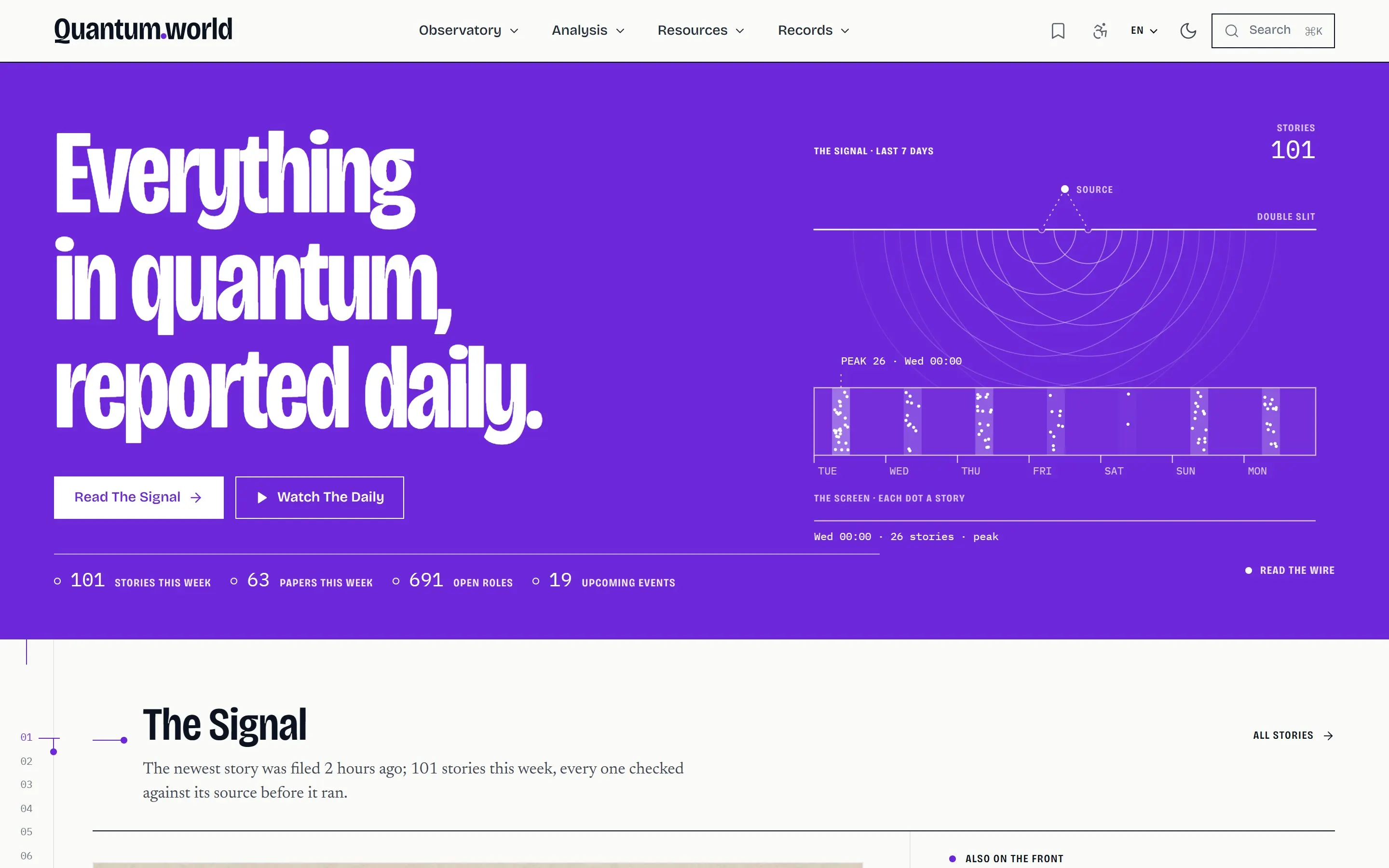
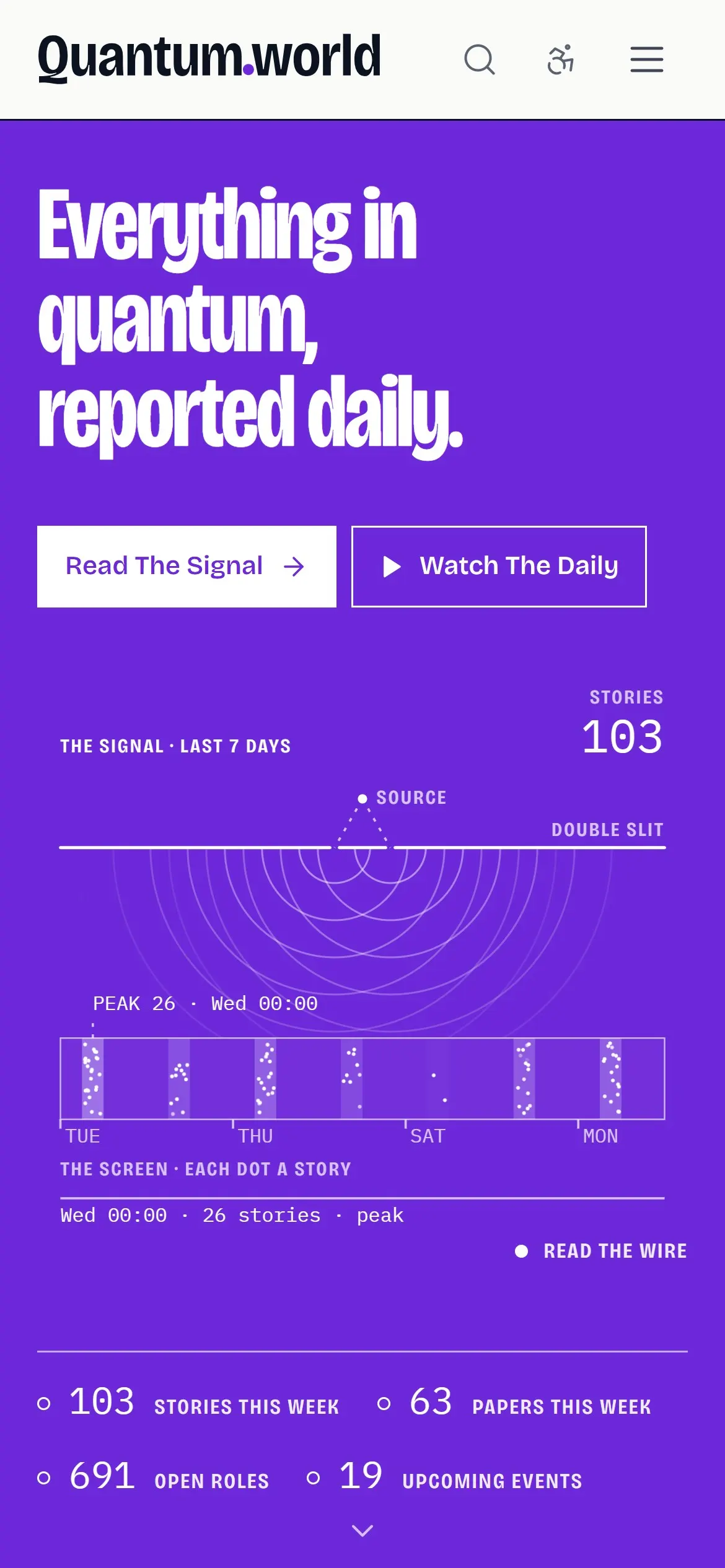
Violet, an opening drawing of interference fringes and a chip, and a name for the news: the Signal. The tables are where the design work shows: columns for modality, physical and logical qubits and gate fidelity sit side by side, so that the number a headline would lead with is never read without the numbers that qualify it.
Outcomes
- 2,074public pages, sitemap 2026-11-21
- 37systems in the Qubit Tracker, from 21 makers
- 16records, each with its method
- 19post-quantum instruments in the PQC Map
- 4registers, every value with its day
Read on the live site on 25 October and 16–17 November 2026: the sitemap, the registers and the About page.
Together with Crypto.world and Robotics.world, Quantum.world shows the same idea from a third side: one editorial system, specialised by the rules of its field, makes a hard subject legible without making it simpler than it is.
Explore the project
quantum.world
A publication on quantum technologies that turns a field of qubits, records and national programmes into something a non-specialist can follow.
Sources for this case study
- Quantum.world — About (the desk’s rules, the records)
- Quantum.world — Qubit Tracker
- Quantum.world — Records
- Quantum.world — PQC Map
- Quantum.world — How we work
Everything described here can be checked on the live project. Figures were read on 21 Nov 2026; screenshots are captures of the public site.