The record, not the ticker
A publication on crypto and blockchain that keeps a record of the industry — incidents, rules, research — and makes no price calls.
Introduction
Crypto.world is a publication on crypto and blockchain, in English and in Italian: news, research, companies, events and jobs — in its own words, the record of the industry, every claim checked against its source, no price calls.
It runs on the newsroom system FIG’s founder designed for AI.info: the same order of checks, the same separation between the model that writes and the models that verify. What is specific to Crypto.world is everything a general system cannot know — the ways this particular field tends to get its facts wrong.
The challenge
Crypto is the field where a headline can move money in minutes. Prices are everywhere and predictions are cheap; a hack is first described by people who lost funds or by people who caused it; impersonated accounts post confident announcements; dollar figures change meaning as prices move.
A newsroom here has to be designed against four specific failures: the prediction dressed as news, the early rumour about an exploit, the fake official account, and the number without a date.
The concept
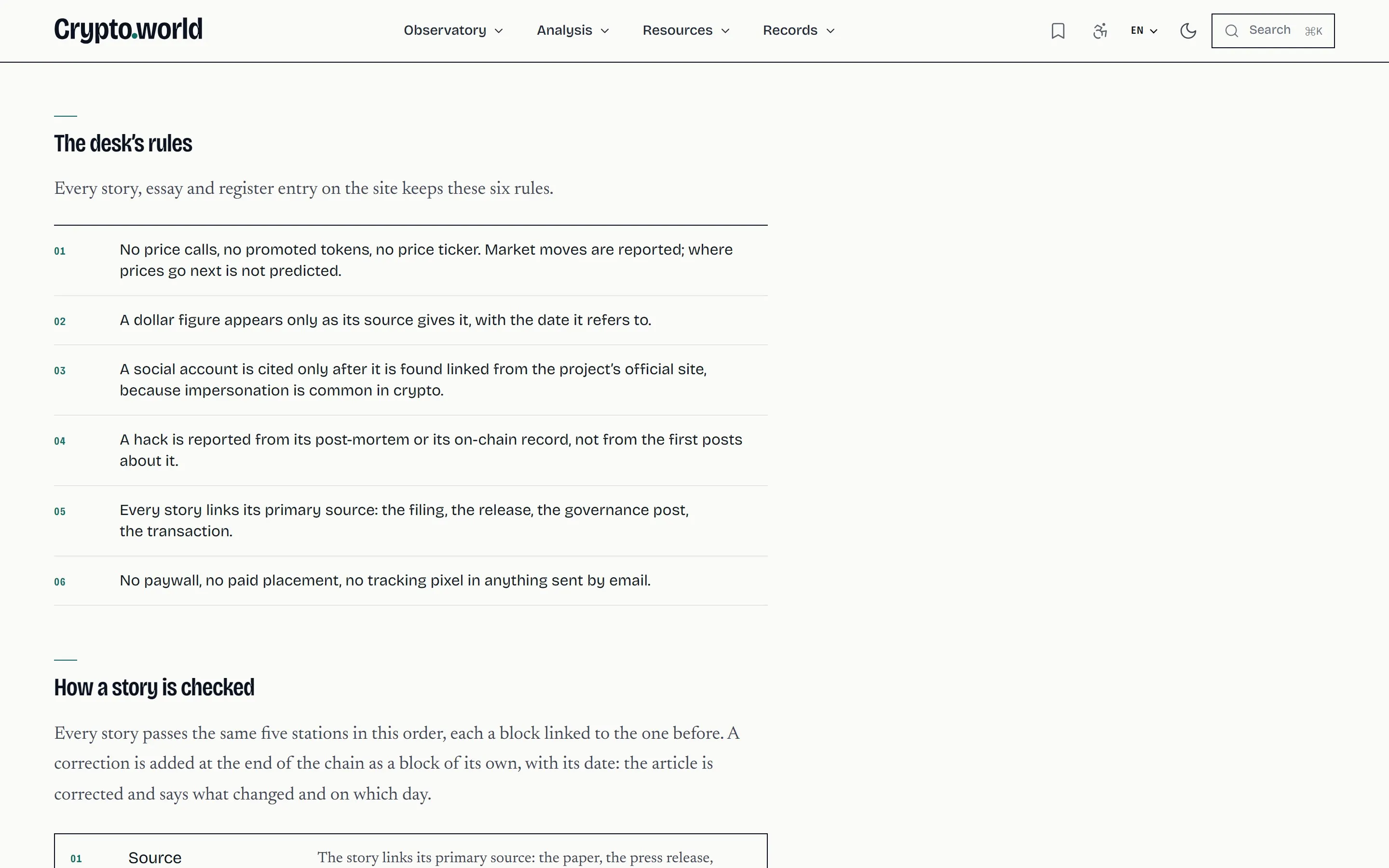
The answer is written down as six rules that every story, essay and register entry keeps. Four of them exist only because of what crypto is:
- No price calls, no promoted tokens, no price ticker. Market moves are reported; where prices go next is not predicted.
- A dollar figure appears only as its source gives it, with the date it refers to.
- A social account is cited only after it is found linked from the project’s official site, because impersonation is common.
- A hack is reported from its post-mortem or its on-chain record, not from the first posts about it.
Market moves are reported; where prices go next is not predicted.
The records
What the news moves past is kept in three registers, entry by entry. Each entry gives its dates, links its official source — the project’s statement, the on-chain record or the regulator’s text — and names what is still unconfirmed.
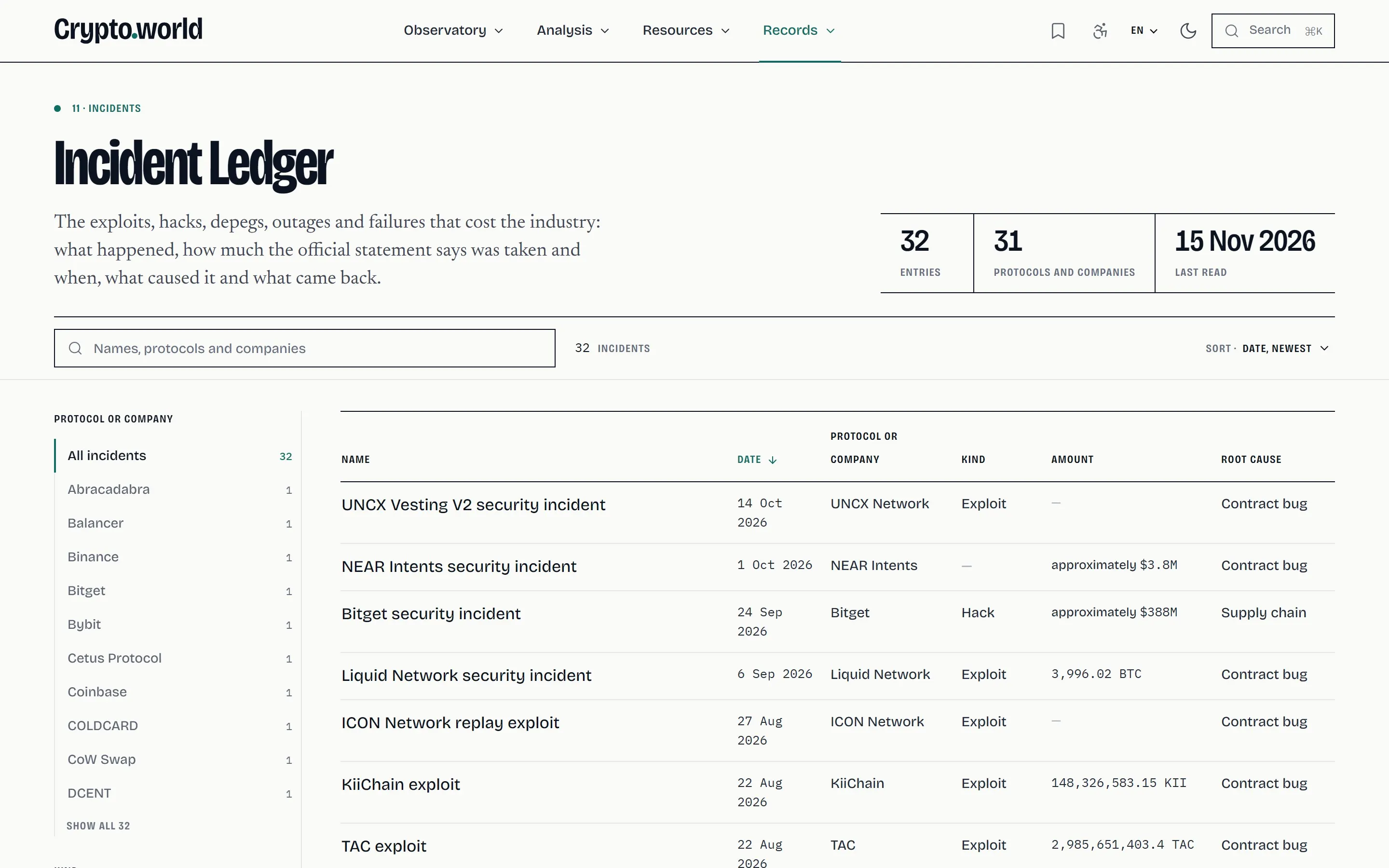
- The Incident Ledger: the exploits, hacks, depegs, outages and failures that cost the industry — what happened, how much the official statement says was taken and when, what caused it and what came back.
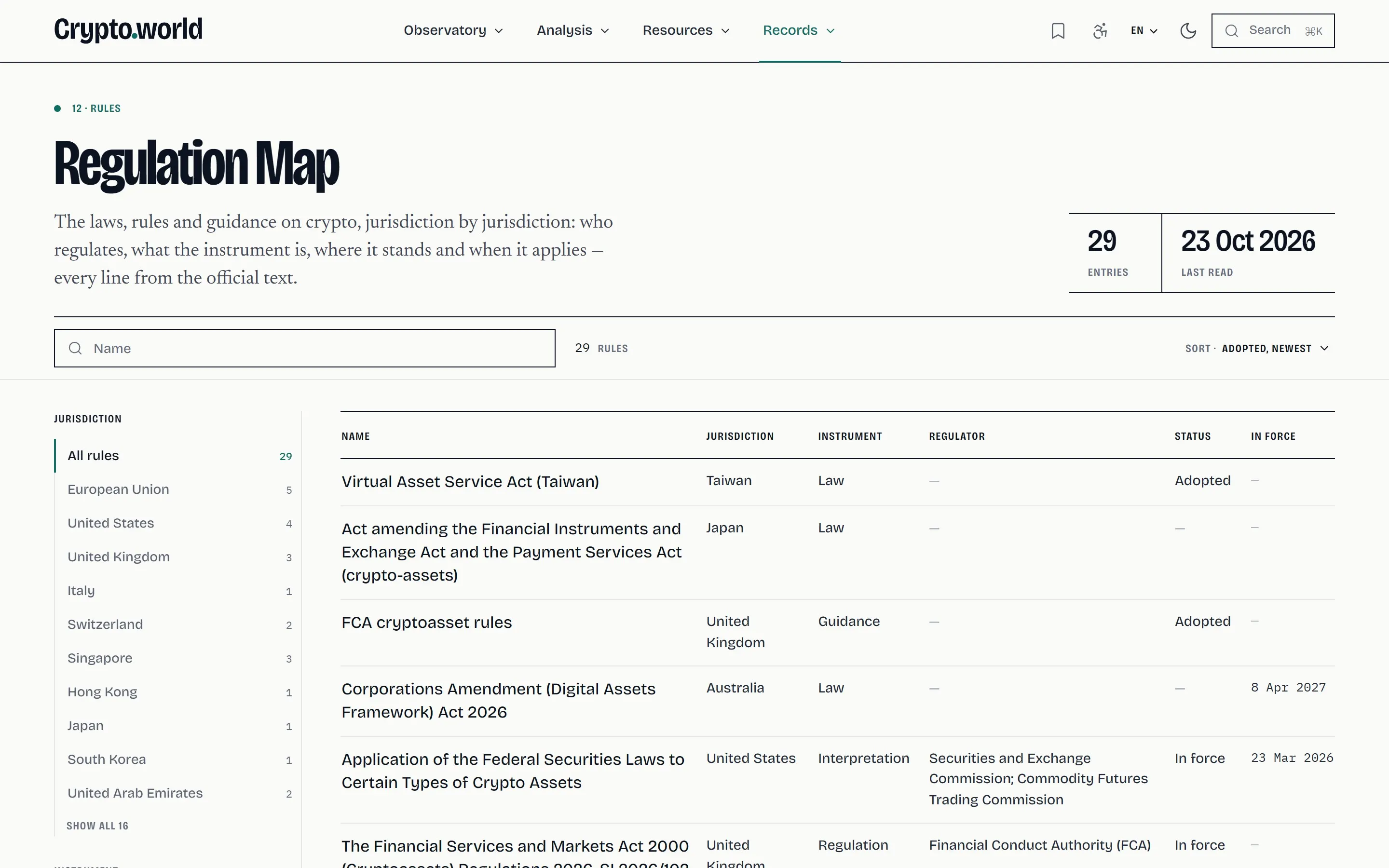
- The Regulation Map: the laws, rules and guidance on crypto, jurisdiction by jurisdiction — who regulates, what the instrument is, where it stands and when it applies.
- Upgrades: every scheduled change to a major network or client, with its activation as the core team prints it.
The design
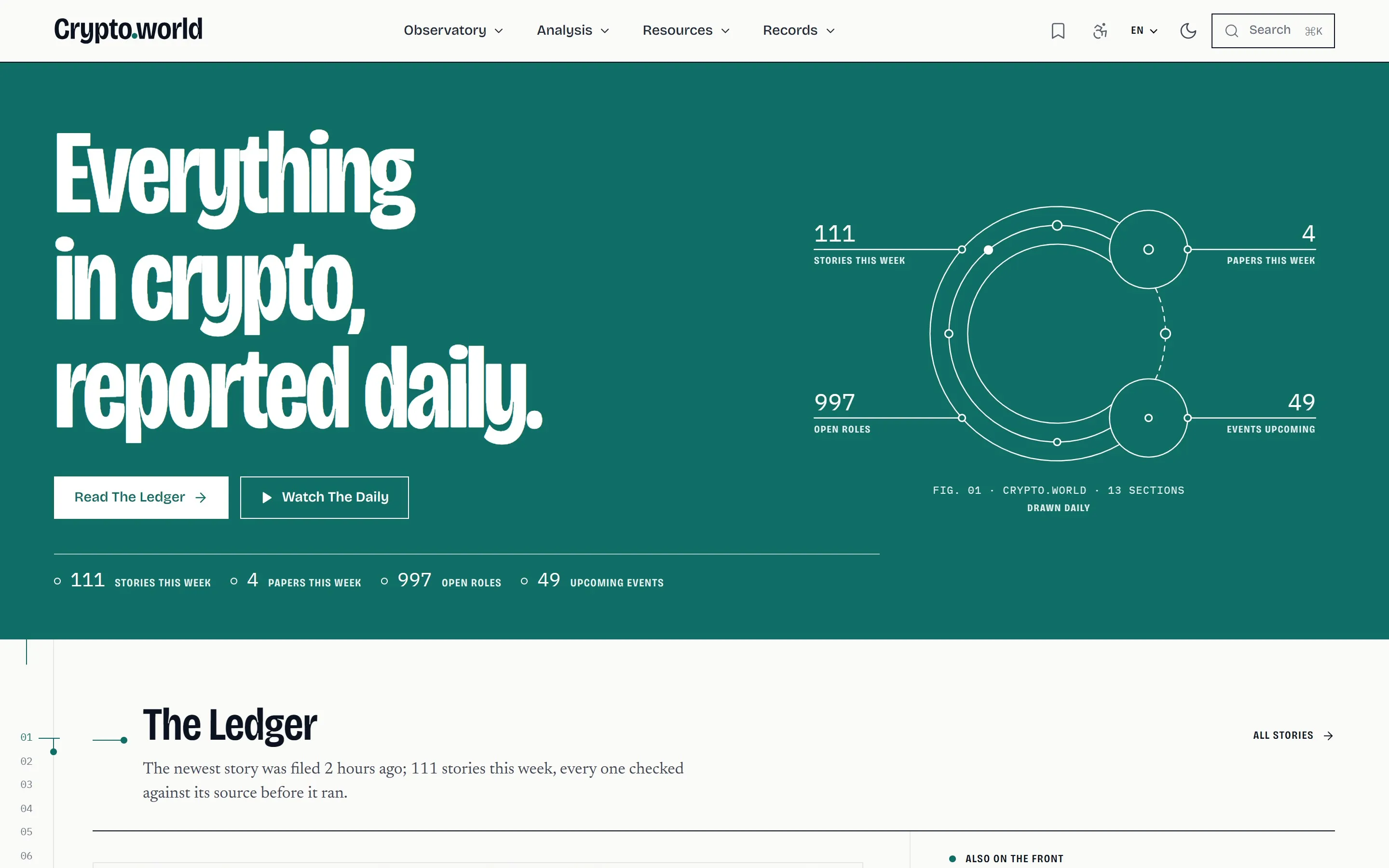
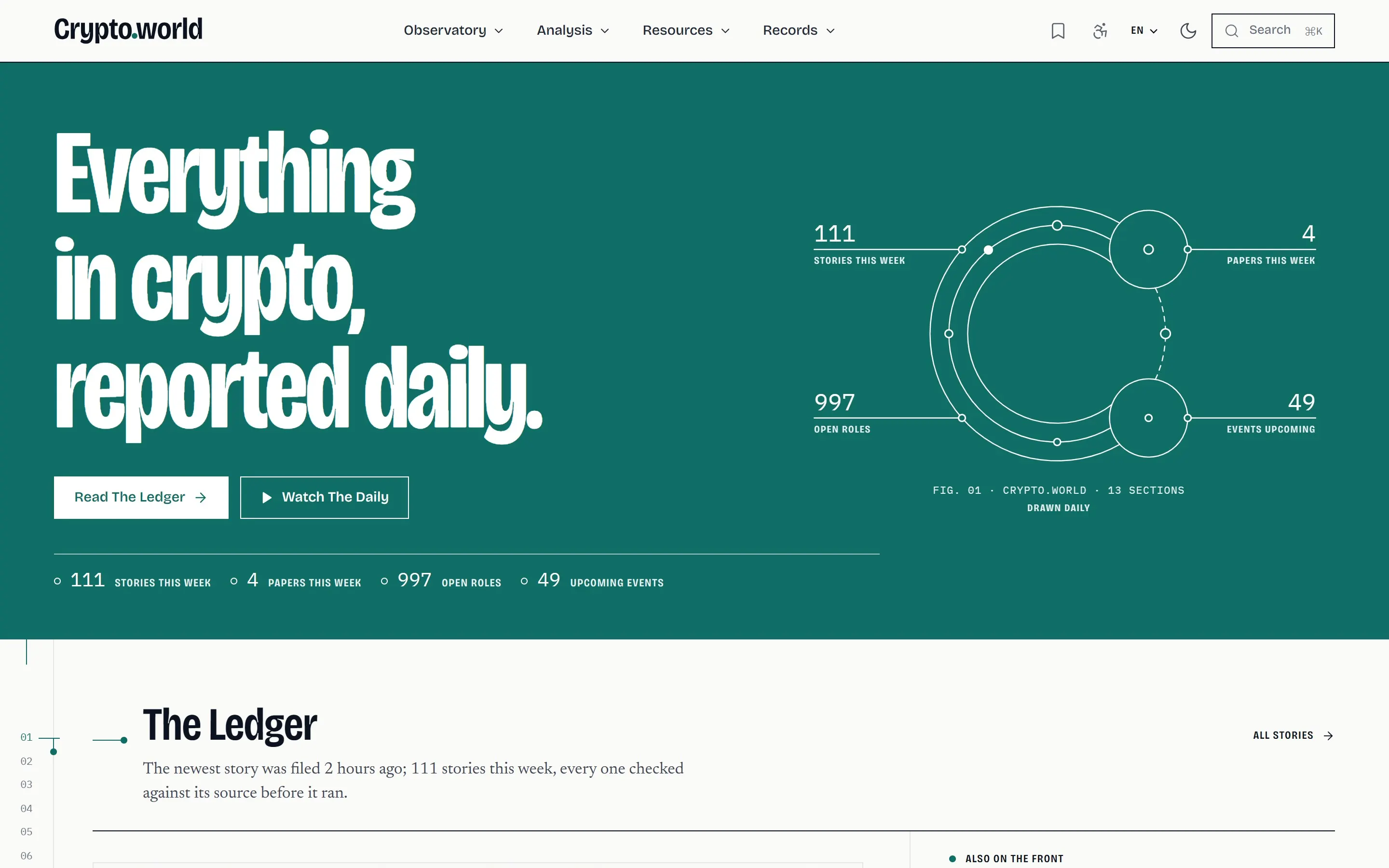
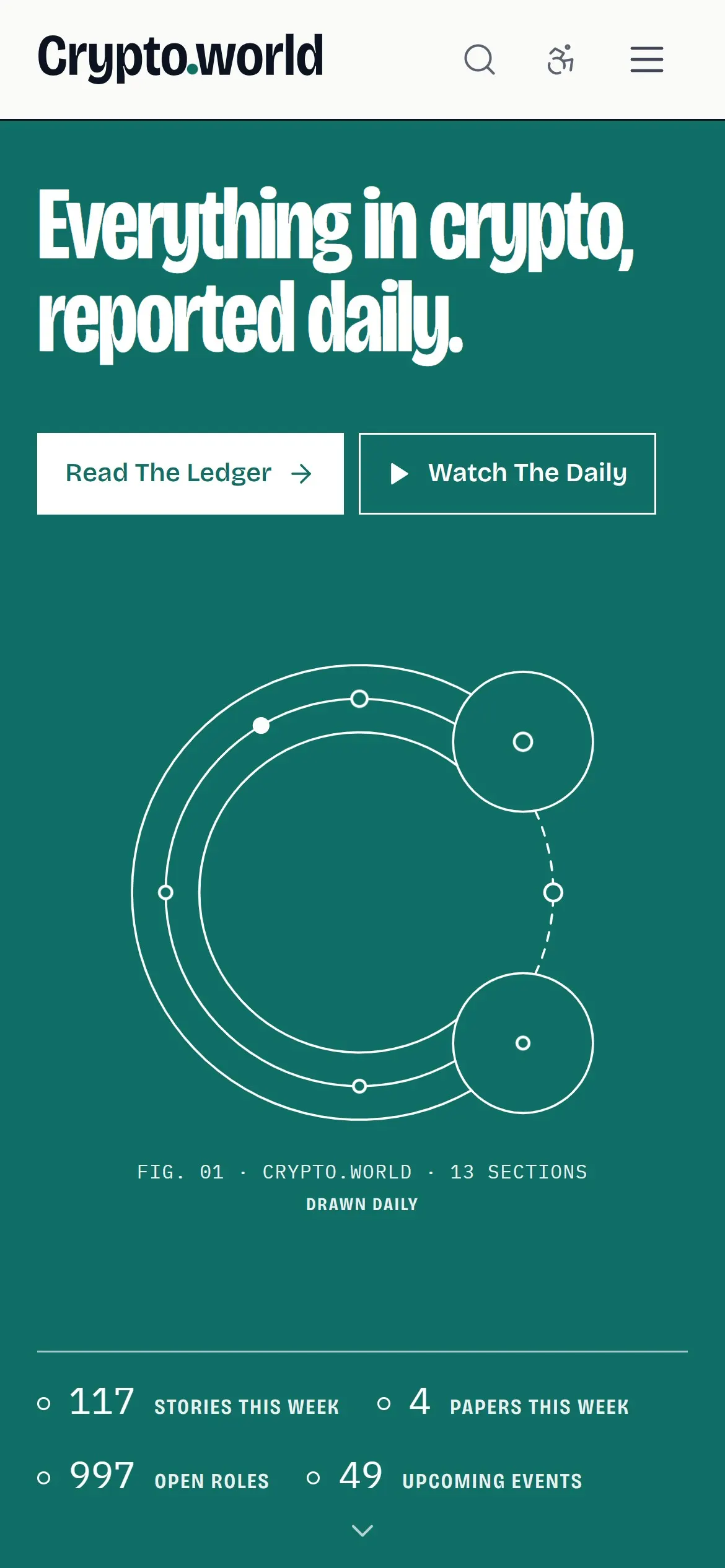
Crypto.world shares the grid, the typography and the components of its sister publications, and changes three things: a colour (teal), an opening instrument (a ring-shaped ledger, drawn rather than photographed) and a vocabulary. The news is not the Pulse here but the Ledger.
The absence of a ticker is itself a design decision. In a field where every other page opens with prices, the front page of Crypto.world opens with the week’s count of stories, papers, open roles and events — the size of the record, not the mood of the market.
Outcomes
- 1,772public pages, sitemap 2026-11-21
- 32incidents in the ledger, from 31 protocols and companies
- 29rules in the Regulation Map
- 6desk rules kept by every story and entry
- 0price calls
Read on the live site on 15–17 November 2026: the sitemap, the registers and the About page.
Crypto.world shows how a shared editorial system becomes specific: not by changing the machinery, but by writing down what this field gets wrong — and making the product refuse to do it.
Explore the project
crypto.world
A publication on crypto and blockchain that keeps a record of the industry — incidents, rules, research — and makes no price calls.
Sources for this case study
- Crypto.world — About (the desk’s rules, the records)
- Crypto.world — How we work
- Crypto.world — Incident Ledger
- Crypto.world — Regulation Map
- Crypto.world — The Weekly
Everything described here can be checked on the live project. Figures were read on 21 Nov 2026; screenshots are captures of the public site.